From Months to Days: How VR Simulation Cut Furnace Training Costs by 50% and Eliminated Live-Equipment Risk
By shifting the entire learning curve into a high-fidelity virtual environment, the facility completely decoupled operator onboarding from live production risks. The operation successfully compressed a multi-month onboarding bottleneck into a highly precise, sub-week curriculum.
The Problem: Live-Equipment Risks and Severe Financial Stakes in Furnace Operator Training
In heavy industrial operations like steel manufacturing, the Ladle Furnace (LF) and Electric Arc Furnace (EAF) represent the most hazardous, capital-intensive environments on the plant floor. Operators must manage extreme thermal energy, volatile chemical reactions, and complex machinery under strict timelines. Historically, training new operators required a dangerous compromise: either shadowing experienced personnel on live, high-risk equipment or relying on static classroom manuals. Neither method accurately prepared trainees for the split-second decisions required when a furnace operating parameter deviated from the norm.
The financial and operational stakes of this training gap are severe. Introducing unassisted, inexperienced operators to a live furnace floor risks catastrophic asset damage, costly refractory wear, and unscheduled downtime that can derail an entire mill’s supply chain. Furthermore, traditional field training relies heavily on subjective intuition and unrepeatable operational scenarios. Because plants cannot intentionally trigger system failures or hazardous anomalies for training purposes, operators frequently encountered critical emergencies for the first time during live production, where a single miscalculation could result in severe injury or multi-million-dollar equipment losses.
Images & Video
Challenges · Solution · Results
- Managing extreme thermal energy, volatile chemical reactions, and complex machinery under strict timelines within high-risk LF and EAF environments.
- Ineffectiveness of traditional field training compromises, which relied on dangerous live shadowing or static classroom manuals.
- High financial and operational risks of introducing unassisted, inexperienced operators to live production floors, including catastrophic asset damage, costly refractory wear, and unscheduled downtime.
- Inability to intentionally trigger real-world system failures or hazardous anomalies for training purposes, leaving operators unprepared for live emergencies.
- Deployed an intelligent, scenario-based virtual training model built on the AlsanX EBI Train platform.
- Leveraged an immersive VR/XR digital twin environment backed by real-world industrial physics to capture exact spatial layouts and control interfaces.
- Implemented a dynamic scenario engine to stress-test operators against high-risk deviations like cooling system failures, electrode breakage, and thermal runaways.
- Tracked every input, response time, and procedural step to transform hidden operational constraints into objective performance data for management.
- Completely decoupled operator onboarding from live production risks by shifting the training curve to a high-fidelity virtual environment.
- Successfully compressed a multi-month onboarding bottleneck into a highly precise, sub-week curriculum.
- Realized a 50% minimum reduction in operational training costs.
- Achieved a 20% increase in technical accuracy during live procedural execution and critical emergency response scenarios.
- Protected production capacity and preserved capital assets by minimizing operator-induced equipment strain and refractory damage.
In-Depth Documentation
What AlsanX Did
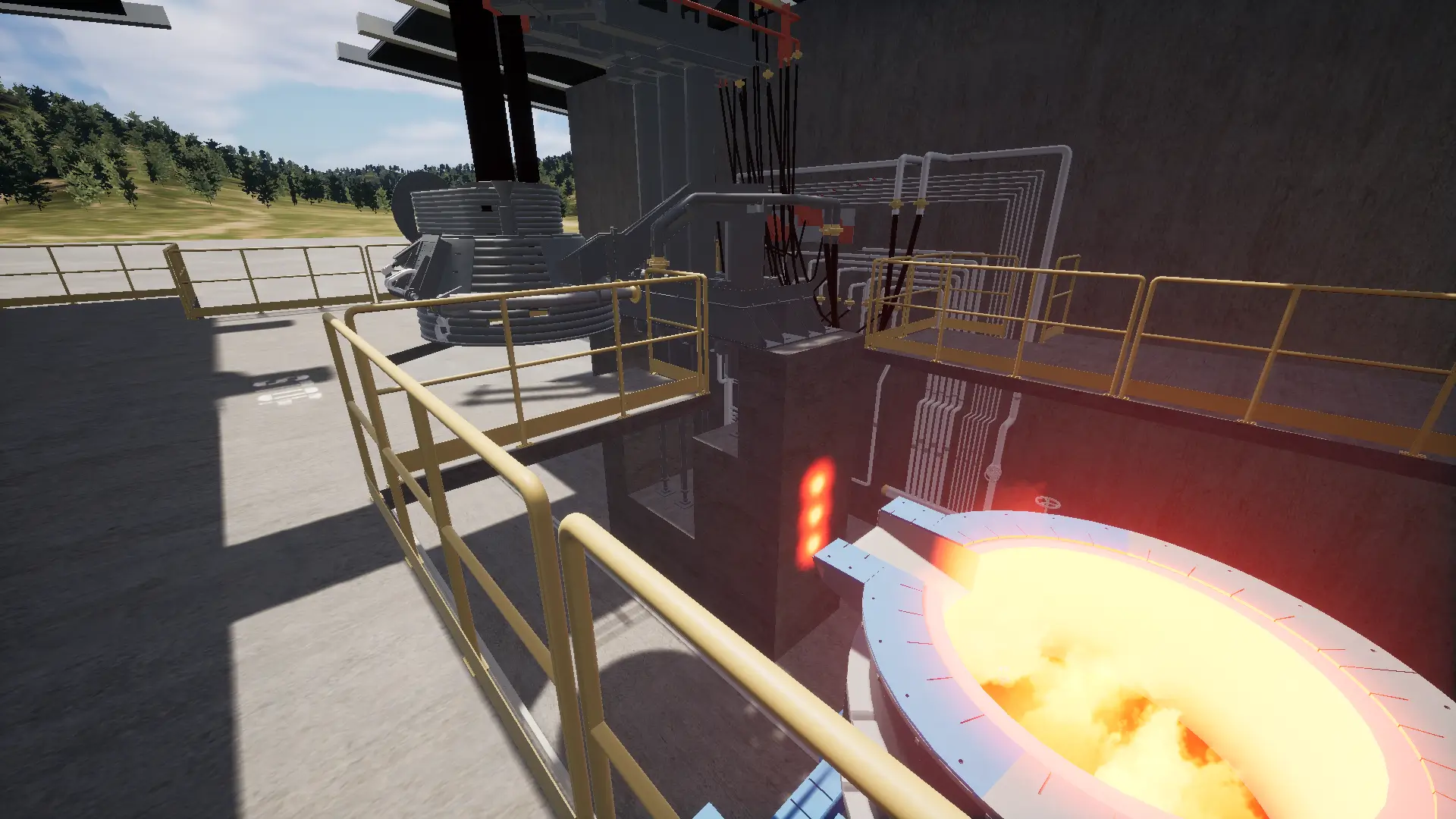
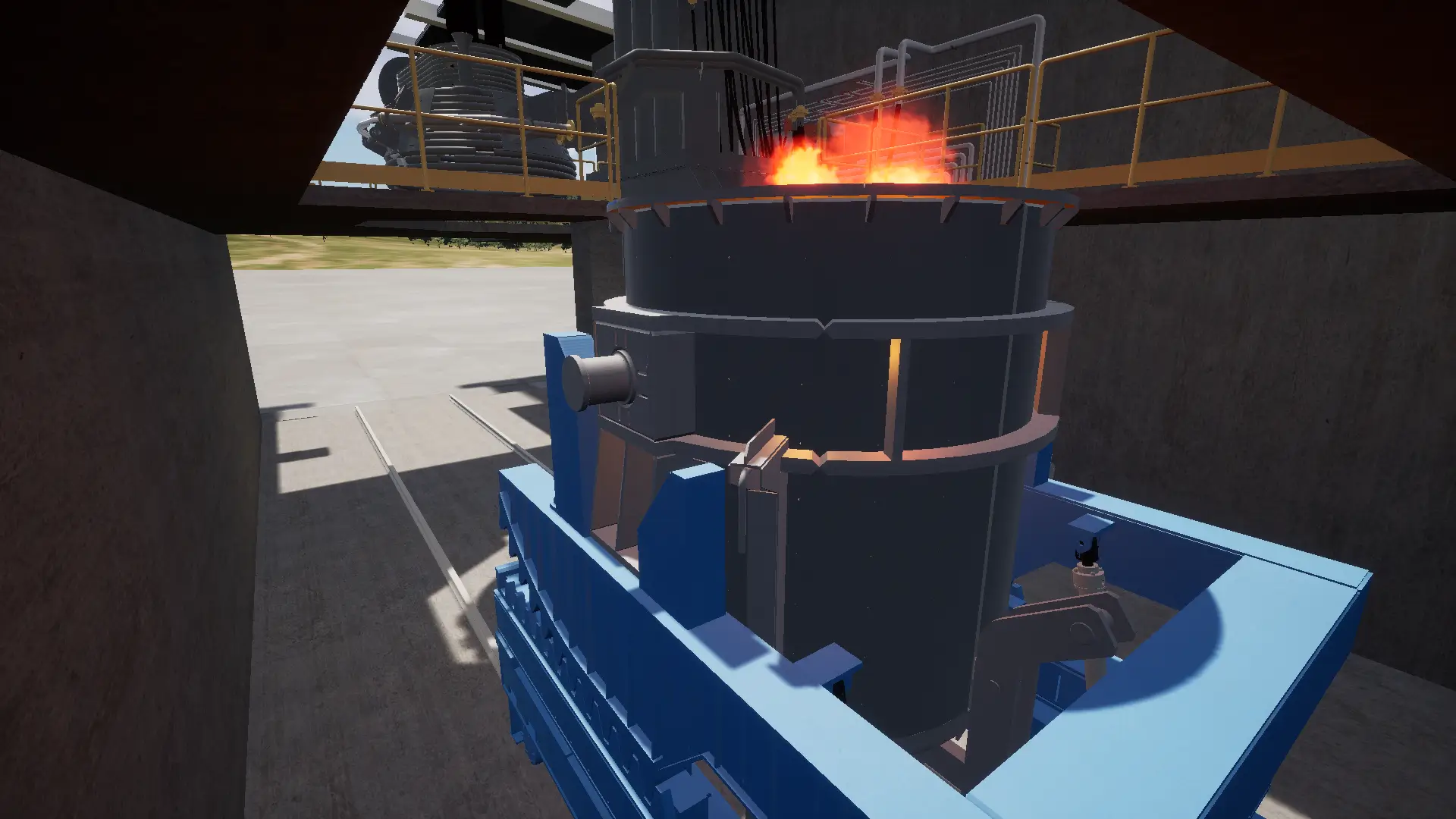
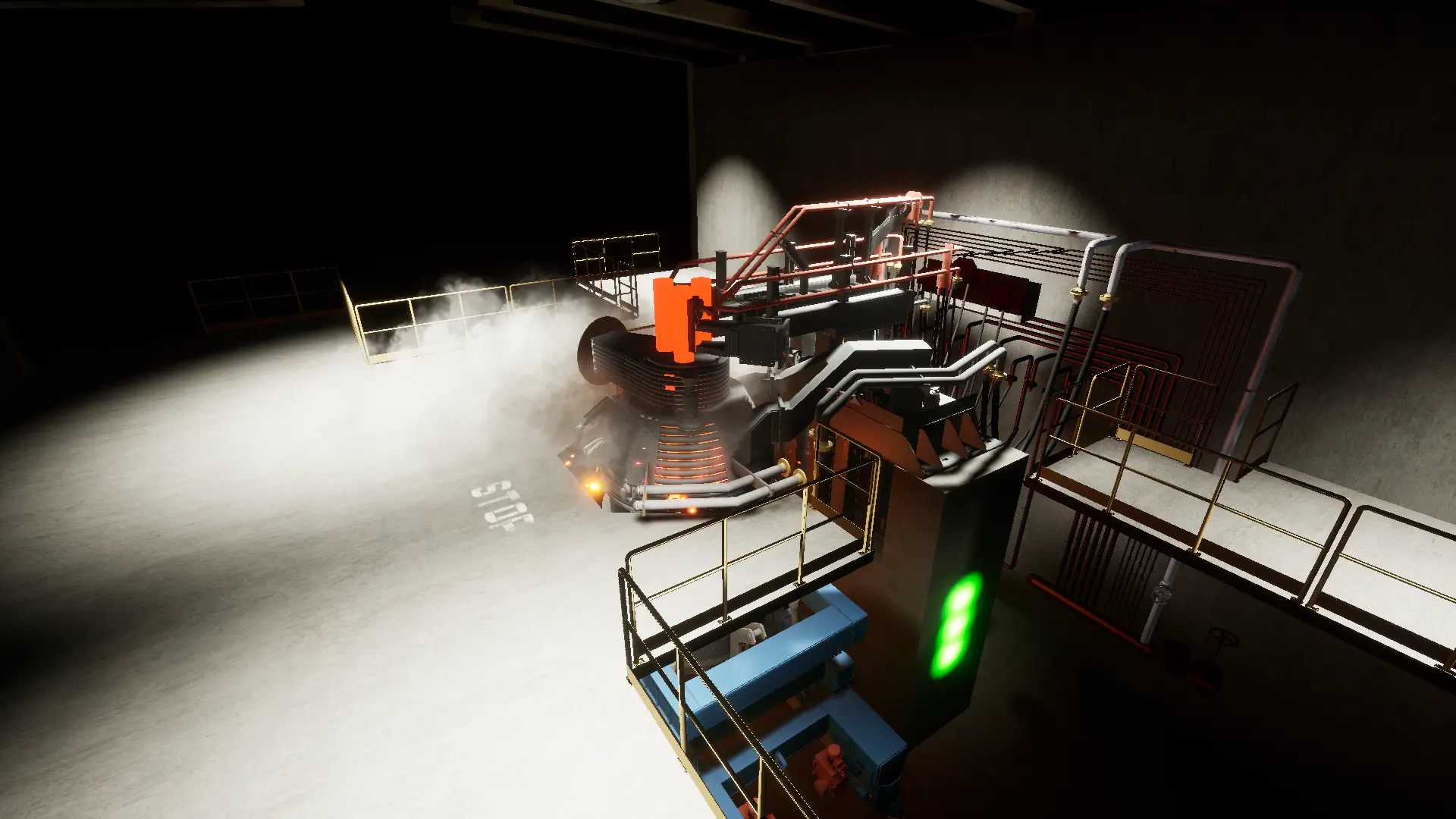
To eliminate these operational blind spots, AlsanX deployed an intelligent, scenario-based virtual training model built on the AlsanX EBI Train platform. Rather than relying on static assumptions or rigid flowcharts, the simulation leverages an immersive VR/XR environment backed by real-world industrial physics and operating patterns. The digital twin captures the exact spatial layout, control interfaces, and behavioral dynamics of both LF and EAF systems, allowing trainees to interact with detailed 3D representations of critical furnace components with total technical clarity.
The core of the AlsanX solution lies in its dynamic scenario engine. Trainees are subjected to structured practice pathways that mirror day-to-day operations, but they are also stress-tested against abnormal and acute emergency conditions. The EBI Train model simulates high-risk deviations—such as cooling system failures, electrode breakage, and thermal runaways—forcing operators to analyze real-time data and execute corrective procedures under pressure. The software tracks every input, response time, and procedural step, making hidden operational constraints visible and giving management objective data on trainee competency.
The Outcome
By shifting the entire learning curve into a high-fidelity virtual environment, the facility completely decoupled operator onboarding from live production risks. Trainees can now make mistakes, trigger catastrophic simulated failures, and master complex furnace workflows repeatedly without risking a single piece of physical equipment or a single minute of plant downtime. The operation successfully compressed a multi-month onboarding bottleneck into a highly precise, sub-week curriculum, ensuring every operator steps onto the live melt shop floor with verified competency, absolute confidence, and proven technical accuracy.
What the Virtual Environment Replicates
- High-fidelity 3D furnace components allowing comprehensive, risk-free spatial exploration of EAF and LF systems.
- Dynamic behavioral feedback that reacts realistically to operator inputs, mimicking actual thermodynamic and mechanical constraints.
- Multi-tiered operational scenarios encompassing normal start-up/shut-down cycles, subtle process deviations, and acute emergencies.
- Granular performance tracking that measures step-by-step procedural compliance and real-time decision-making latency.
What the Plant Operation Safeguards
- Zero physical exposure of green trainees to high-voltage, extreme-thermal metallurgy hazards during early skill acquisition.
- Production capacity protection by eliminating the need to slow down or idle live furnace assets for field training.
- Capital asset preservation through the drastic reduction of operator-induced refractory damage or equipment strain.
- Standardized workforce competency that ensures uniform compliance with plant safety protocols across all shifts.
Tools & Technologies
Contact AlsanX Today to Schedule a Workforce Simulation Audit
Are unoptimized onboarding timelines and live-equipment risks bottlenecking your industrial workforce?
Get in Touch →Explore more case studies
See how we've applied these methods across logistics, manufacturing, and beyond.
View All Case Studies →