Catching Critical Infrastructure Defects Before Failure: How a Digital Twin Automated Energy Asset Inspections
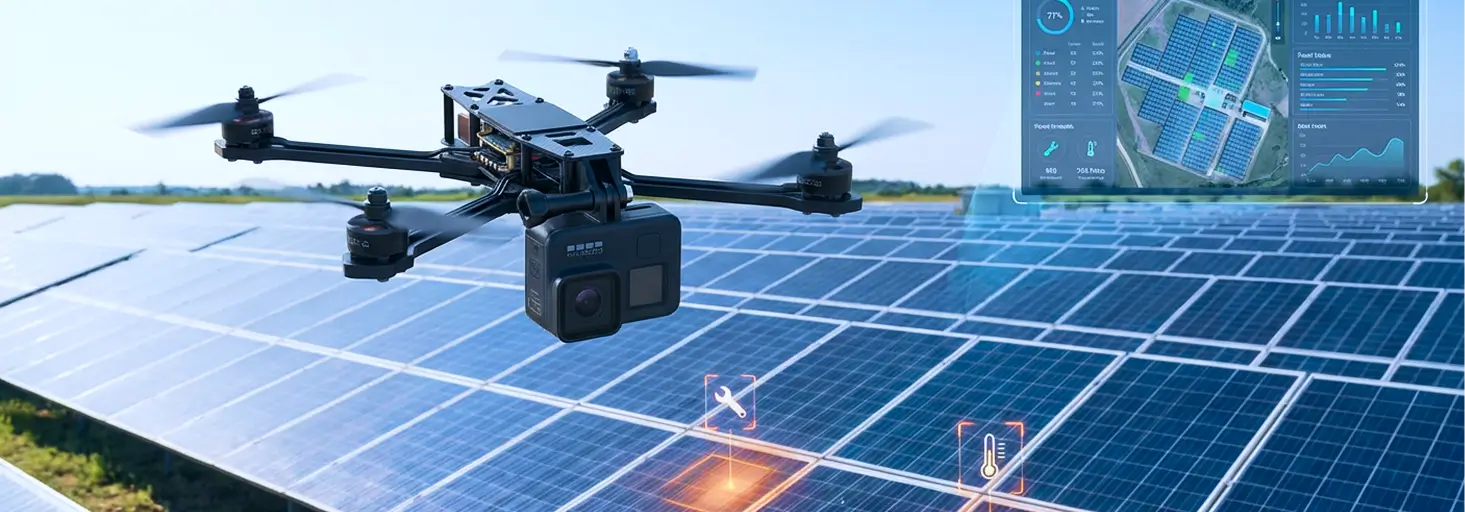
AlsanX deployed an end-to-end autonomous drone inspection workflow integrated directly into the AlsanX EBI Twin+ platform to automate fault detection and ensure continuous asset lifecycle management.
The Problem: Operational Liabilities and Inefficiencies in Manual Asset Inspections
Utility providers face immense operational liabilities managing sprawling solar fields and hundreds of miles of high-voltage transmission lines. Traditional manual asset inspection relies heavily on ground crews traversing challenging terrain or technicians manually reviewing thousands of low-resolution images. This approach is inherently slow, highly labor-intensive, and introduces human error and inconsistency across data sets.
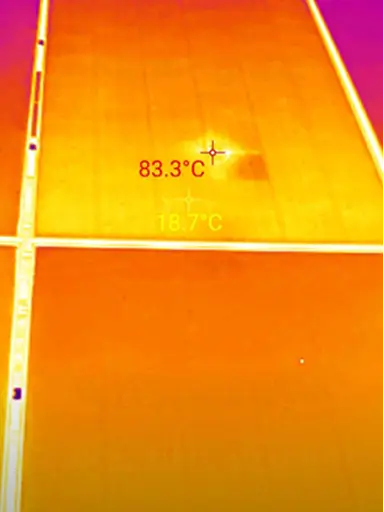
Without granular, automated asset tracking, micro-defects—such as localized hot spots in photovoltaic cells or structural anomalies on high-voltage lines—frequently go undetected. Operators are left responding reactively to equipment failures rather than preventing them. Making blind maintenance adjustments without historical trend data often results in misallocated capital, high operational expenditure, and severe safety risks for field personnel working near energized systems.
Compounding this issue is the lack of a centralized data architecture. Inspection logs are typically trapped in disparate spreadsheets or siloed report folders, making long-term degradation tracking mathematically impossible. Manual intuition and periodic spot-checking fail to capture the complex, compounding wear-and-tear of exposed outdoor infrastructure, creating a high-stakes vulnerability for the utility grid’s overall reliability.
Images & Video
Challenges · Solution · Results
- Sprawling solar fields and hundreds of miles of high-voltage transmission lines create immense operational liabilities.
- Traditional manual asset inspection is slow, highly labor-intensive, and introduces human error.
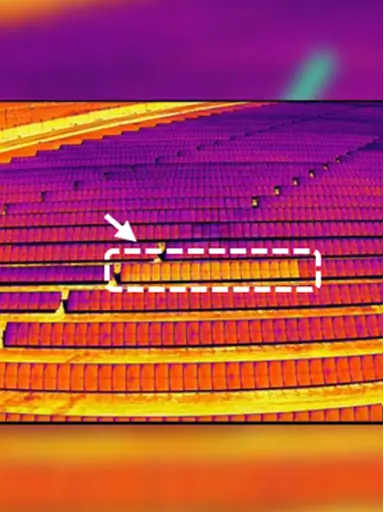
- Micro-defects (such as localized hot spots or structural anomalies) frequently go undetected without automated tracking.
- Operators respond reactively to equipment failures due to a lack of historical trend data.
- High safety risks for field personnel working near energized systems.
- Inspection logs are trapped in disparate spreadsheets or siloed report folders due to a lack of centralized data architecture.
- Severe data silos caused by historically disconnected inspection reports.
- Deployed an end-to-end autonomous drone inspection workflow integrated directly into the AlsanX EBI Twin+ platform.
- Programmed specialized autonomous drones to execute highly precise, repeatable flight paths across the entire utility footprint.
- Used long-range drones equipped with advanced optical zoom to capture hyper-detailed imagery from safe operating distances.
- Pushed raw geospatial and thermal data to the AlsanX AI-powered vision processing engine to analyze components against historical baselines.
- Automatically flagged micro-cracks, degradation patterns, and power line stress anomalies, mapping them to precise geographic coordinates within a dynamic digital twin environment.
- Revolutionized the utility's maintenance framework, moving asset management from reactive guessing to structured, data-driven precision.
- Secured total visibility over infrastructure health without incurring massive equipment overhaul costs or expanding ground crews.
- Optimized maintenance intervals, drastically reduced asset downtime, and ensured grid reliability through predictive engineering.
- Total elimination of high-risk manual climbing and ground-crew exposure.
- Established a centralized, location-based historic log for predictable asset lifecycle budgeting.
- Drastically reduced mean time to detect (MTTD) asset anomalies before grid failure occurs.
In-Depth Documentation
What AlsanX Did
AlsanX addressed these vulnerabilities by deploying an end-to-end autonomous drone inspection workflow integrated directly into the AlsanX EBI Twin+ platform. Instead of relying on manual spot-checks, specialized autonomous drones were programmed to execute highly precise, repeatable flight paths across the entire utility footprint. For high-voltage transmission lines, long-range drones equipped with advanced optical zoom captured hyper-detailed imagery from safe operating distances, eliminating human risk.
The raw geospatial and thermal data was then pushed to the AlsanX AI-powered vision processing engine. This system went beyond static image review, analyzing thousands of components against historical baselines to automatically flag micro-cracks, degradation patterns, and power line stress anomalies. Every asset anomaly was mathematically mapped to its precise geographic coordinate within a dynamic digital twin environment.
By contextualizing real-time capture against past data within the digital twin, AlsanX made hidden asset constraints and degradation curves entirely visible. This allowed operations teams to stress-test their maintenance scheduling under variable seasonal conditions, shifting the utility provider from reactive firefighting to a prescriptive, long-term asset management strategy.
The Outcome
The integration of AlsanX EBI Twin+ revolutionized the utility’s maintenance framework, moving asset management from reactive guessing to structured, data-driven precision. By replacing slow manual inspections with an automated, AI-driven drone network, the operator secured total visibility over infrastructure health without incurring massive equipment overhaul costs or expanding ground crews. The continuous data stream feeding the digital twin optimized maintenance intervals, drastically reduced asset downtime, and ensured grid reliability through predictive engineering.
What the AlsanX System Exposed
- Hidden hot spots and structural micro-defects invisible to standard ground patrols.
- Severe data silos caused by historically disconnected inspection reports.
- Accelerated degradation trends on specific high-voltage line components due to environmental stress.
What the Operator Secured
- Total elimination of high-risk manual climbing and ground-crew exposure.
- A centralized, location-based historic log for predictable asset lifecycle budgeting.
- Drastically reduced mean time to detect (MTTD) asset anomalies before grid failure occurs.
Tools & Technologies
Are hidden component defects quietly draining your utility asset efficiency and driving up O&M costs?
Contact AlsanX Today to Schedule an Asset Digitalization Audit
Get in Touch →Explore more case studies
See how we've applied these methods across logistics, manufacturing, and beyond.
View All Case Studies →