
How AI-Driven Vision and Digital Twins Eliminated Blind Spots in High-Risk Industrial Environments
The deployment completely modernized the facility's safety posture, shifting operations from a reactive oversight model to an autonomous, predictive safety ecosystem. By embedding intelligent hazard analysis directly into the site's operational design via EBI Twin+, the client successfully mitigated workplace risks and achieved flawless HSE compliance.
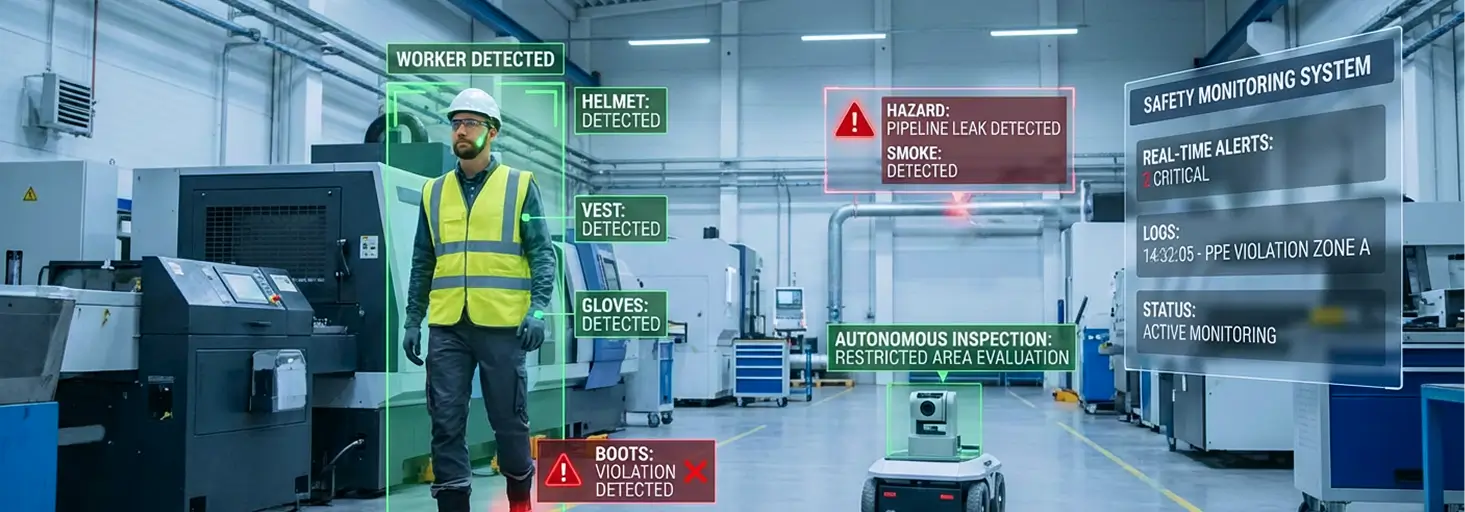
The Problem: Manual Supervision Limitations, Blind Spots, and Reactive Safety Management
In high-risk industrial environments, traditional safety management relies heavily on manual supervision—a methodology inherently limited by human fatigue, cognitive load, and physical blind spots. Industrial facilities span massive, complex footprints where Health, Safety, and Environment (HSE) officers cannot maintain continuous, omnipresent visibility. As a result, critical safety infractions, such as improper PPE usage or unauthorized entry into restricted zones, frequently go unnoticed until an incident occurs, exposing the organization to severe regulatory penalties and operational liabilities.
Furthermore, critical environmental hazards like early-stage fires, micro-leaks, and subtle equipment abnormalities develop insidiously. By the time a human operator visually identifies smoke or notes a physical drop in pressure, the hazard has typically progressed into an emergency state. This reactive posture forces costly, unscheduled operational shutdowns and compromises personnel safety. Relying on standard engineering intuition or static observations fails to address the root cause: a fundamental lack of real-time, predictable visibility on the plant floor.
The operational stakes escalate dramatically in restricted or extreme-environment zones. Sending maintenance technicians into high-temperature, toxic, or high-voltage areas to perform routine inspections introduces unacceptable human risk. Without an automated, intelligent layer of continuous monitoring, operations management remains trapped in a reactive cycle, managing the costly aftermath of accidents rather than preventing them entirely.
Images & Video
Challenges · Solution · Results
- Traditional safety management relies on manual supervision limited by human fatigue, cognitive load, and physical blind spots.
- HSE officers cannot maintain continuous, omnipresent visibility across massive, complex facility footprints.
- Critical environmental hazards develop insidiously, forcing a reactive posture that results in costly, unscheduled operational shutdowns.
- Performing routine inspections in restricted, high-temperature, toxic, or high-voltage areas introduces unacceptable human risk.
- Deployed advanced AI-Vision and Digital Twin ecosystem utilizing the AlsanX EBI Twin+ platform to map operating patterns, worker movements, and environmental variables.
- Integrated deep-learning computer vision models with existing facility cameras and specialized autonomous inspection vehicles.
- Calibrated and stress-tested AI models against thousands of edge-case operational scenarios like poor lighting, dust occlusion, and dense equipment layouts.
- Integrated autonomous mobile inspection units equipped with thermal imaging and gas-sensing payloads to feed live telemetry back into the EBI Twin+ engine.
- Modernized the facility's safety posture into an autonomous, predictive safety ecosystem and achieved flawless HSE compliance.
- Permanently safeguarded the workforce and eliminated the need for expensive physical modifications to the plant floor layout.
- Successfully identified intermittent compliance gaps, micro-thermal anomalies, and spatial vulnerabilities that manual audits missed.
- Avoided costly HSE regulatory fines, eliminated human exposure to hazardous zones, and prevented escalated downtime by catching asset leaks and thermal hazards at the incubation stage.
In-Depth Documentation
What AlsanX Did
To bridge this operational visibility gap, AlsanX deployed its advanced AI-Vision and Digital Twin ecosystem, transforming passive site camera networks into an active, intelligent safety infrastructure. Utilizing the AlsanX EBI Twin+ platform, the engineering team mapped real operating patterns, worker movements, and environmental variables into a synchronized digital environment. This went far beyond static assumptions, capturing the true dynamic variability of daily plant floor operations.
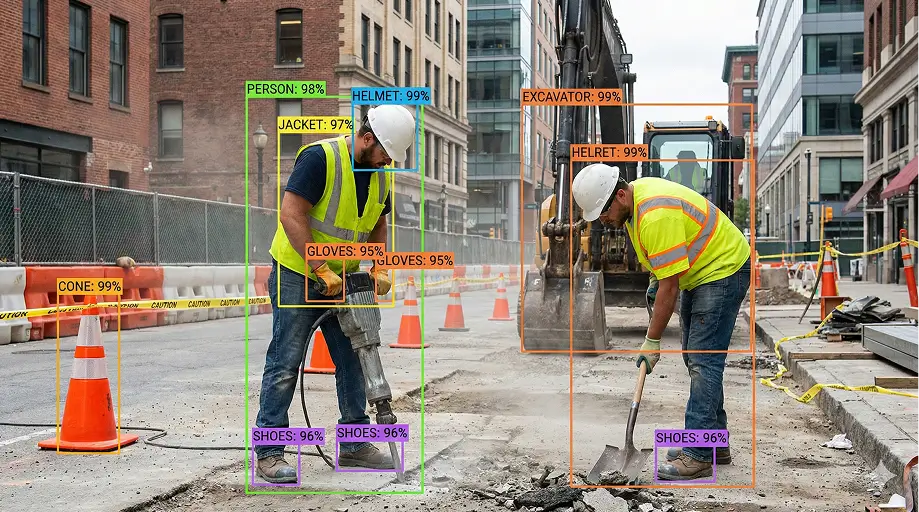
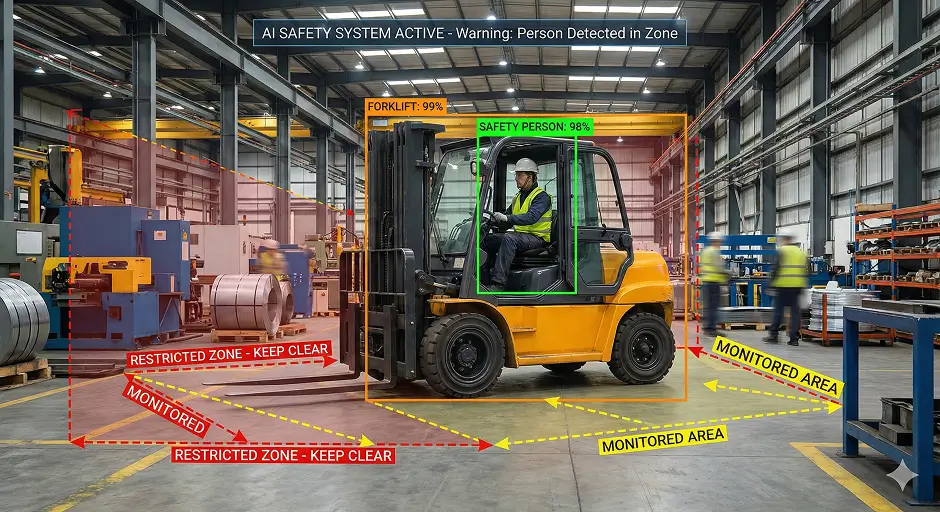
The core solution integrated deep-learning computer vision models with existing facility cameras and specialized autonomous inspection vehicles. The AI models were calibrated and stress-tested against thousands of edge-case operational scenarios—including poor lighting, dust occlusion, and dense equipment layouts. This ensured the system could accurately verify PPE compliance, track geofenced boundaries, and detect unsafe actions in real time without generating disruptive false alarms.
For highly dangerous or inaccessible zones, AlsanX integrated autonomous mobile inspection units equipped with thermal imaging and gas-sensing payloads. These units feed live telemetry directly back into the EBI Twin+ engine. By analyzing real-time image anomalies and environmental data, the system flags structural abnormalities, thermal hotspots, and microscopic fluid or gas leaks long before they escalate into catastrophic failures, giving operators the exact insights needed to execute predictive maintenance safely.
The Outcome
The deployment completely modernized the facility’s safety posture, shifting operations from a reactive oversight model to an autonomous, predictive safety ecosystem. By embedding intelligent hazard analysis directly into the site’s operational design via EBI Twin+, the client successfully mitigated workplace risks and achieved flawless HSE compliance. The entire transformation was achieved at the digital and software-integration level, eliminating the need for expensive physical modifications to the plant floor layout while permanently safeguarding the workforce.
What the AI Infrastructure Uncovered
- Intermittent Compliance Gaps: Identified recurring, short-duration PPE violations during specific shift-change windows that manual audits completely missed.
- Micro-Thermal Anomalies: Detected early-stage insulation breakdown on high-temperature piping before traditional SCADA alarms triggered.
- Spatial Vulnerabilities: Mapped high-traffic friction points where worker pedestrian paths intersected dangerously with heavy machinery operating zones.
Risks the Client Successfully Avoided
- Regulatory Non-Compliance: Avoided costly HSE regulatory fines through continuous, automatically logged compliance documentation and audit trails.
- Human Exposure to Hazards: Eliminated the requirement to send human personnel into toxic or high-temperature zones for routine status inspections.
- Escalated Downtime: Prevented catastrophic secondary damage and lengthy plant shutdowns by catching asset leaks and thermal hazards at the incubation stage.
Tools & Technologies
Are hidden safety blind spots and reactive monitoring risking your operational uptime?
Contact AlsanX today to request a comprehensive Industrial Hazard Audit.
Get in Touch →Explore more case studies
See how we've applied these methods across logistics, manufacturing, and beyond.
View All Case Studies →