
Automated Furnace Control & Slag Monitoring Platform
Replacing manual furnace inspections with an AI-driven vision analytics platform to eliminate operational blind spots, reduce safety liabilities, and optimize metal production.
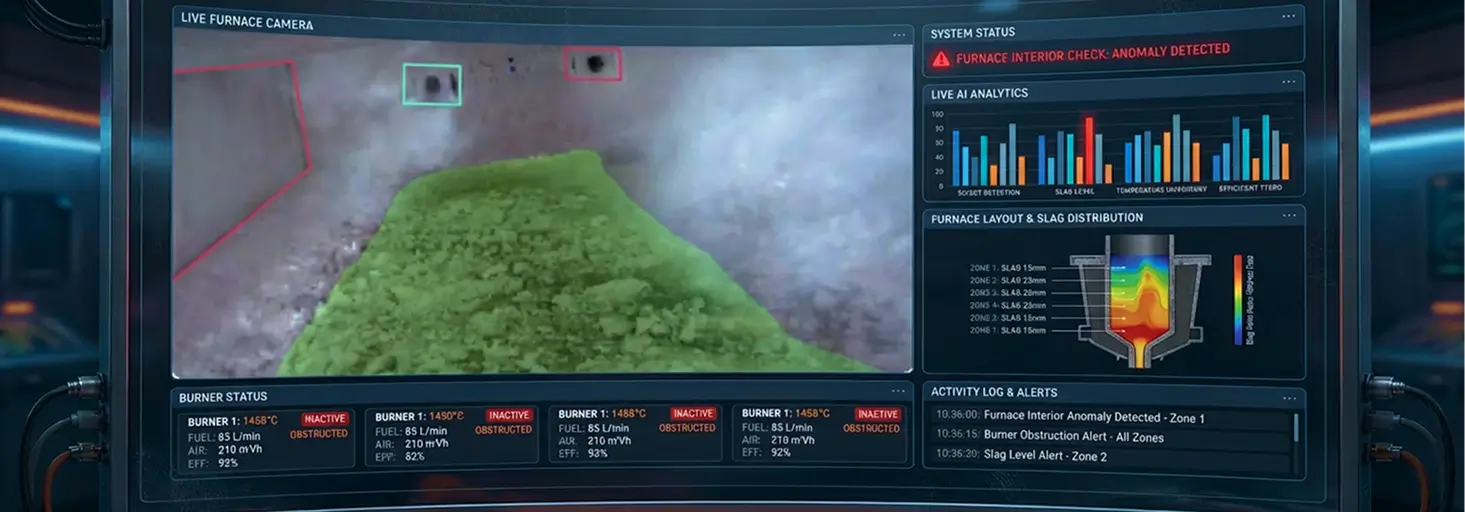
The Problem: Constrained Visibility, Safety Risks, and Inconsistent Manual Monitoring in Furnace Operations
In metal manufacturing and casting operations, the melting environment is a volatile, high-stakes process where operational visibility is severely constrained. Traditionally, the plant relied heavily on manual inspections to track casting levels and detect slag presence, forcing operators to work near extreme thermal radiation and hazardous emissions. This manual approach proved slow, subjective, and inconsistent, creating critical blind spots between inspection intervals. Without precise, real-time data on slag behavior, operators frequently made blind process adjustments, accelerating refractory wear, causing preventable material defects in finished metal strips, and allowing critical anomalies like smoke accumulation or abnormal flames to go completely unnoticed.
Images & Video
Challenges · Solution · Results
- Severe visibility constraints within volatile, high-stakes melting environments.
- Significant safety liabilities from forcing operators to perform manual visual inspections near extreme thermal radiation and hazardous emissions.
- Slow, subjective, and inconsistent tracking that created critical operational blind spots between inspection intervals.
- Accelerated refractory wear and downstream material defects caused by blind process adjustments made without objective, real-time data.
- Critical operational events (such as sudden smoke accumulation, unmelted material clusters, or abnormal flames) going entirely unnoticed.
- Deployed a specialized AI-powered vision analytics platform built on the AlsanX EBI Twin+ architecture.
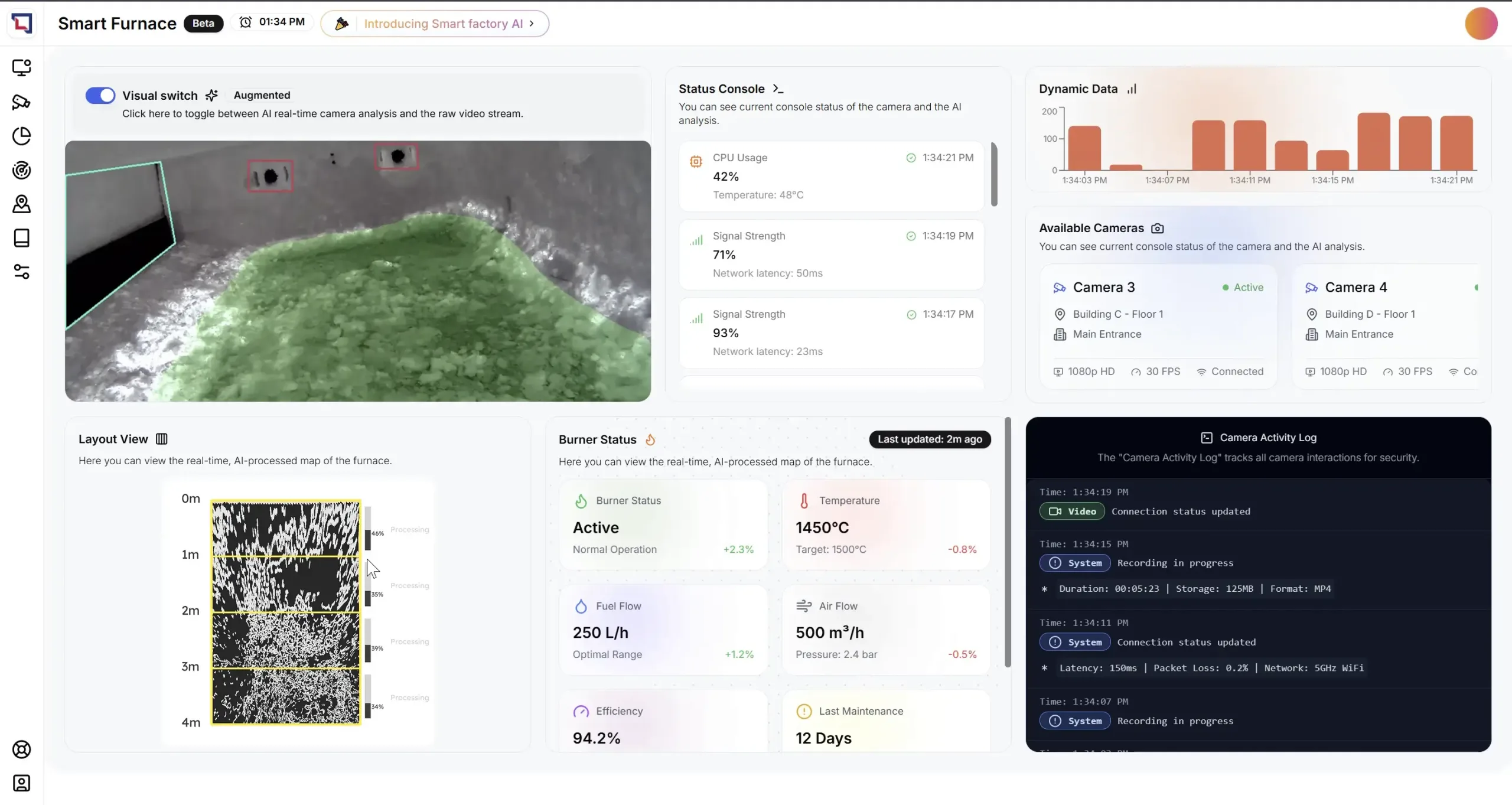
- Integrated high-resolution, industrially hardened camera feeds with advanced deep-learning models trained to identify casting levels and classify slag types.
- Automated spatial analysis of the furnace interior to calculate surface area, estimate thickness, and deliver continuous slag volume tracking.
- Incorporated automated event-detection algorithms to instantly flag hidden operational constraints and transmit real-time alerts to the control room.
- Implemented a dynamic thermal analysis overlay synchronizing live visual feeds with real-time heat-map data to produce a continuous 2D furnace map.
- Transformed furnace operations from a reactive, high-risk workflow into a highly predictable, data-driven process.
- Achieved optimal furnace efficiency, uniform material quality, and complete process transparency without requiring physical asset modifications.
- Eliminated high-risk operator exposure near active, high-temperature furnace doors.
- Eradicated operational lag times and delayed response latency caused by intermittent human oversight.
- Prevented downstream metal strip quality variations by stabilizing casting consistency and slag separation.
- Reduced localized furnace lining wear and mitigated unscheduled maintenance shutdowns.
In-Depth Documentation
What AlsanX Did
AlsanX resolved systemic vulnerabilities by deploying a specialized AI-powered vision analytics platform built on the AlsanX EBI Twin+ architecture to capture live operating patterns and process variability. The engineering team integrated high-resolution, industrially hardened camera feeds with advanced deep-learning models trained to identify casting levels and classify diverse slag types under extreme conditions. The platform automates spatial analysis to calculate surface area and estimate thickness for continuous volume tracking, stress-testing computer vision models against visual interference like smoke, glare, and flame saturation. Additionally, AlsanX implemented a dynamic thermal analysis overlay that synchronizes visual feeds with real-time heat-map data, producing a continuous 2D furnace map to translate chaotic variables into actionable insights.
The Outcome
The deployment transformed the plant’s furnace operations from a reactive, high-risk workflow into a highly predictable, data-driven process. By solving the monitoring bottleneck at the digital Twin level, AlsanX enabled the client to achieve optimal furnace efficiency, uniform material quality, and complete process transparency—all without requiring expensive structural re-engineering or capital-intensive physical asset modifications.
What the AI Simulation Uncovered
- Precise Casting Level Metrics: Continuous, automated tracking of casting levels and exact slag coordinates inside the vessel.
- Volumetric Slag Tracking: Real-time classification of slag types paired with accurate surface area and thickness estimations.
- Instant Anomaly Identification: Immediate automated alerts for operational disruptions like heavy smoke, flame saturation, and unmelted metal.
- Zonal Heat Mapping: Clear visualization of thermal irregularities across specific furnace zones via an integrated 2D distribution map.
What the Operations Team Avoided
- High-Risk Operator Exposure: Eliminated the need for dangerous, manual visual inspections near active, high-temperature furnace doors.
- Delayed Response Latency: Eradicated operational lag times caused by intermittent, subjective human oversight.
- Downstream Metal Defects: Prevented strip quality variations by stabilizing casting consistency and slag separation.
- Unscheduled Maintenance Shutdowns: Reduced localized furnace lining wear by identifying and mitigating thermal imbalances early.
Tools & Technologies
Are unmonitored thermal imbalances and slag variations compromising your casting quality and operator safety?
Contact AlsanX Today to Request a Comprehensive Industrial Vision & Bottleneck Audit
Get in Touch →Explore more case studies
See how we've applied these methods across logistics, manufacturing, and beyond.
View All Case Studies →