Catching a Bottleneck Before the Equipment Was Built
An aluminium manufacturer used a dynamic simulation model to evaluate a new homogenizing line before procurement, revealing a hidden constraint that static engineering models missed.
The Problem: Hidden Bottlenecks in Static Engineering Models
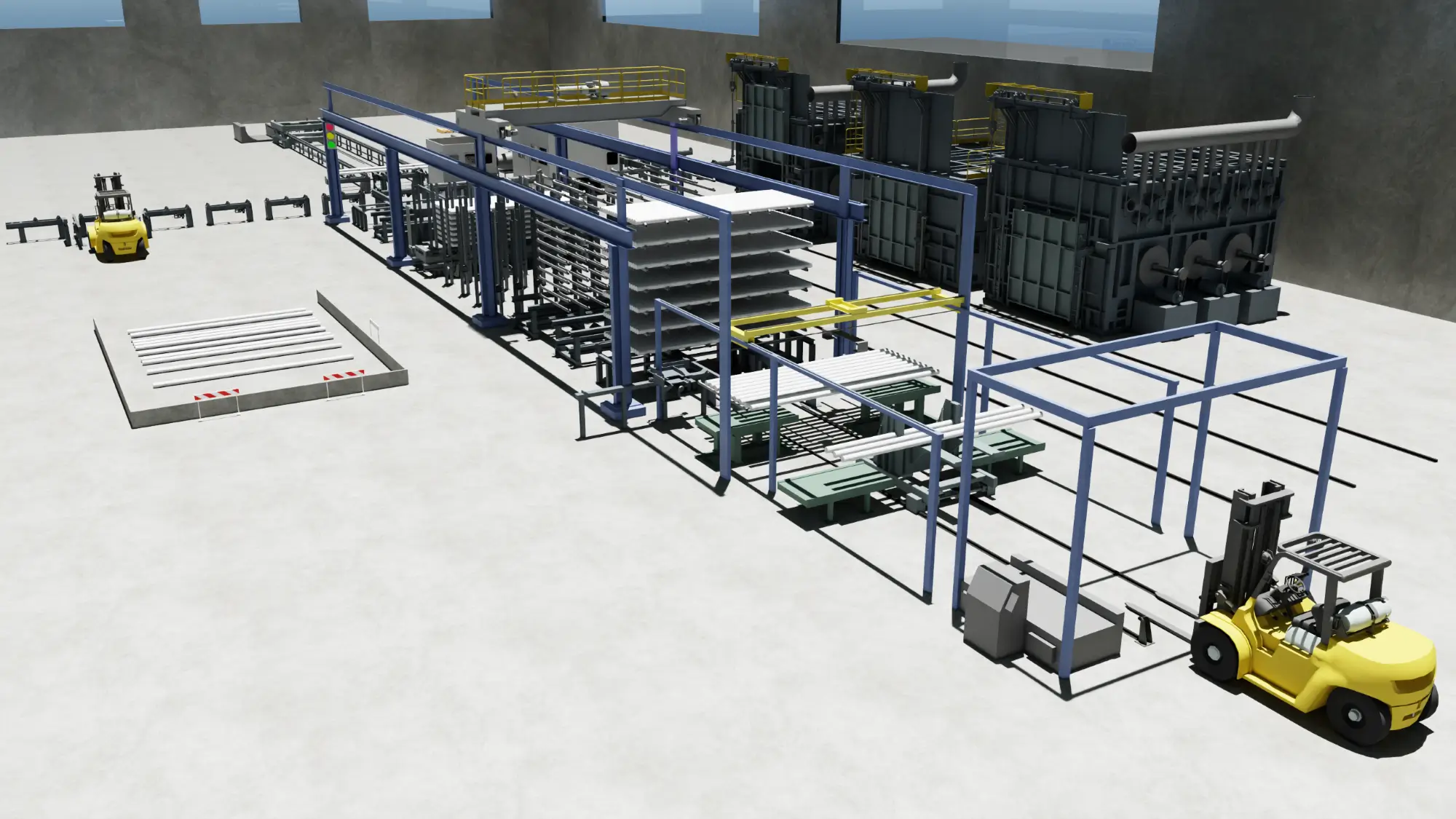
An aluminium manufacturer was finalizing the equipment specification for a new homogenizing line consisting of a gantry crane for billet transport, a charging machine, and three homogenizing furnaces. Although the design passed standard engineering reviews and looked well-balanced on paper, the team could not verify if it would actually perform at capacity under real, dynamic operating conditions when everything was running together. Discovering mistakes after the equipment arrives on site is the most expensive error in industrial design.
Images & Video
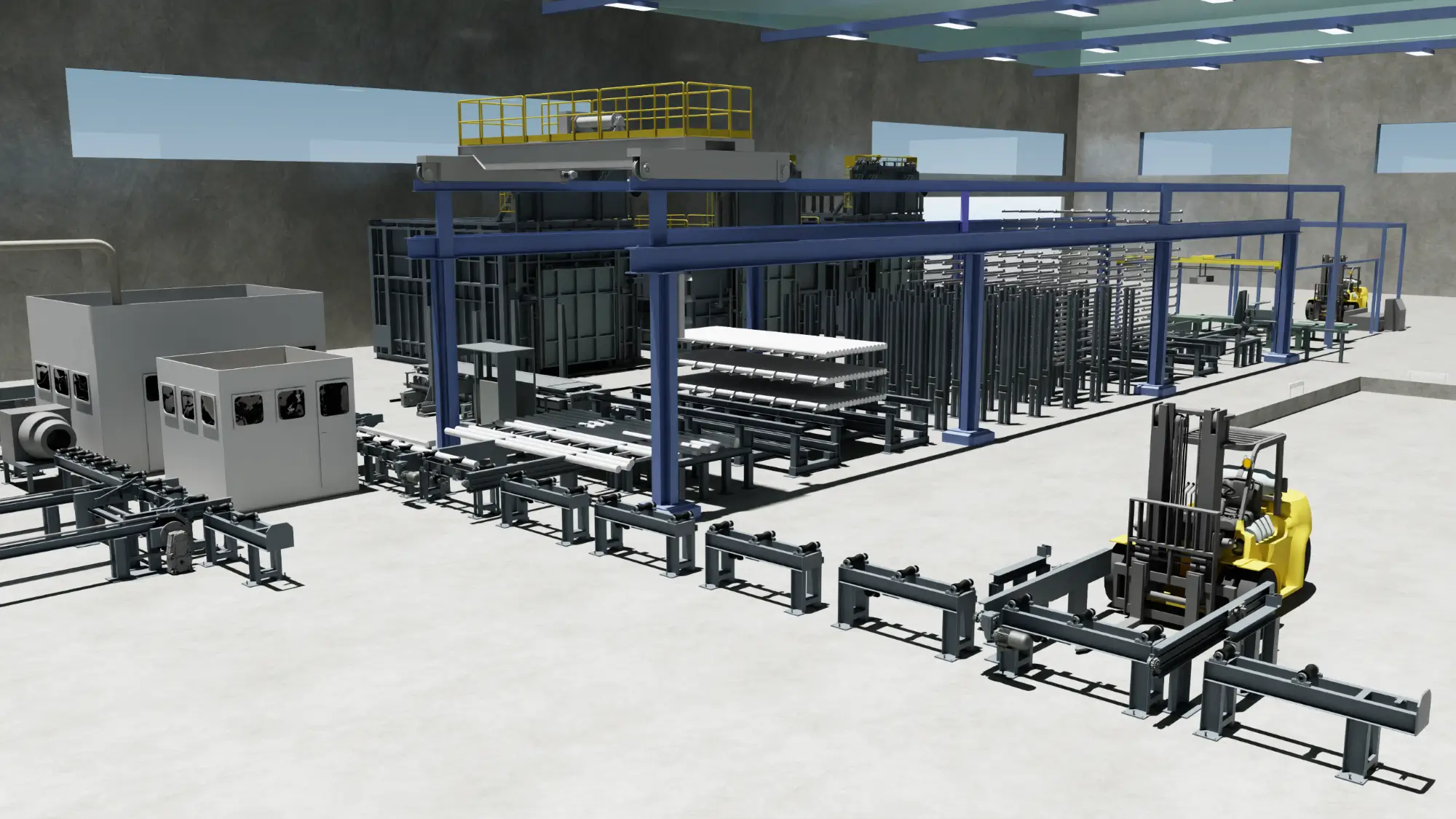
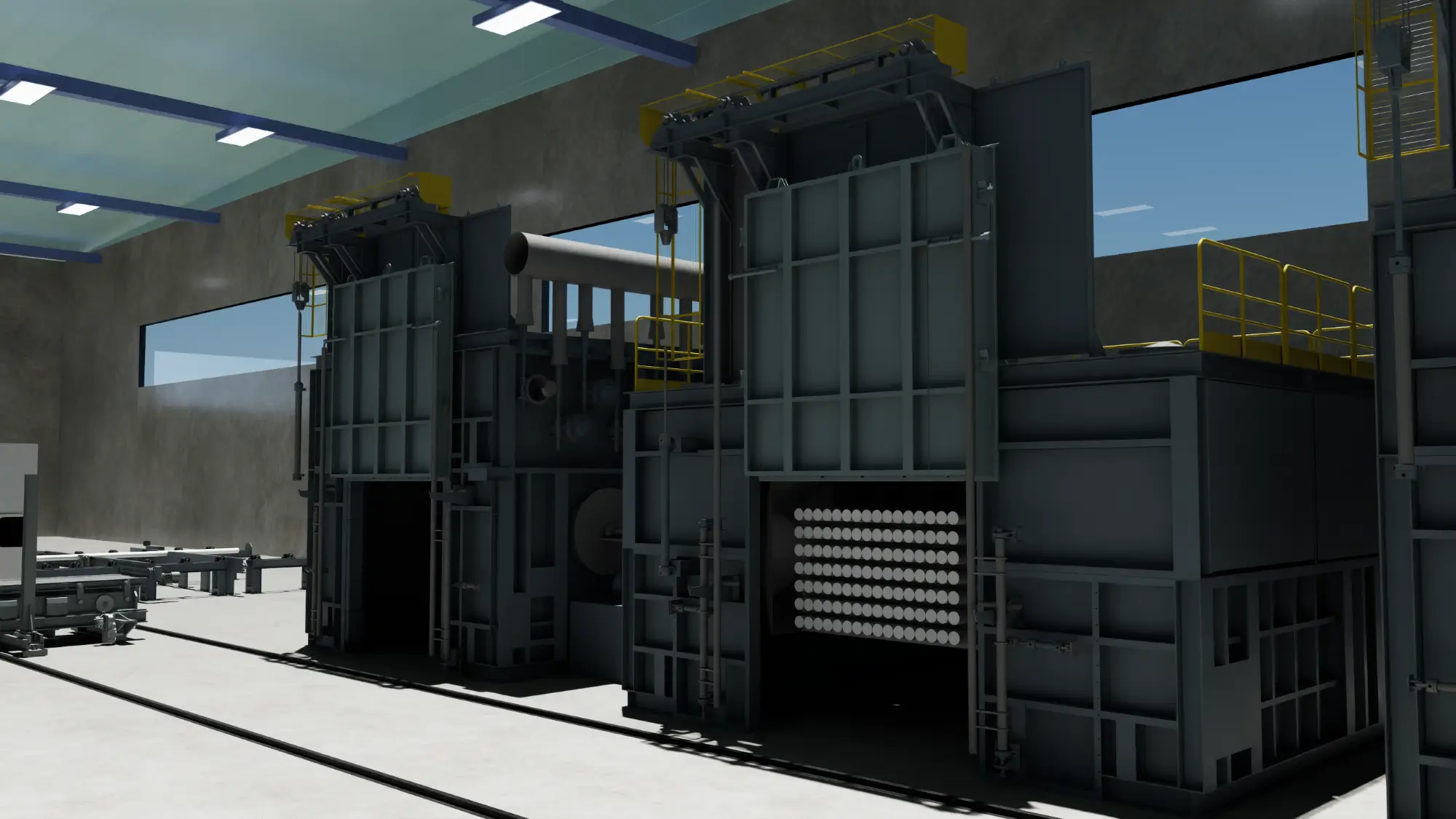
Challenges · Solution · Results
- Capacity expansion risks creating bottlenecks without detailed analysis.
- Static reviews cannot validate time studies or equipment performance under dynamic interaction.
- Engineering decisions require testing multiple operating scenarios.
- Determining if a system will perform at capacity is almost impossible to answer from a static engineering model before equipment is ordered.
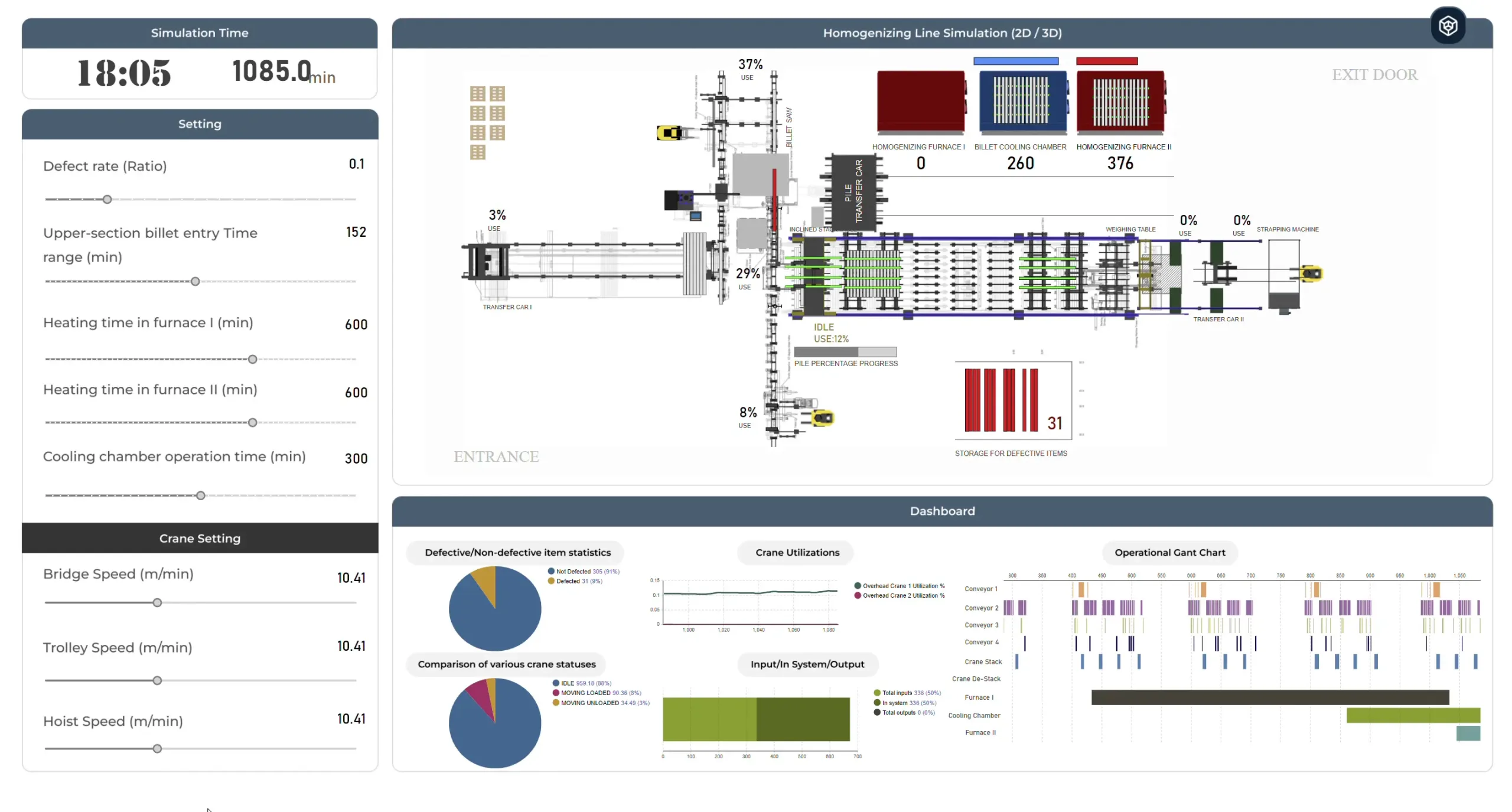
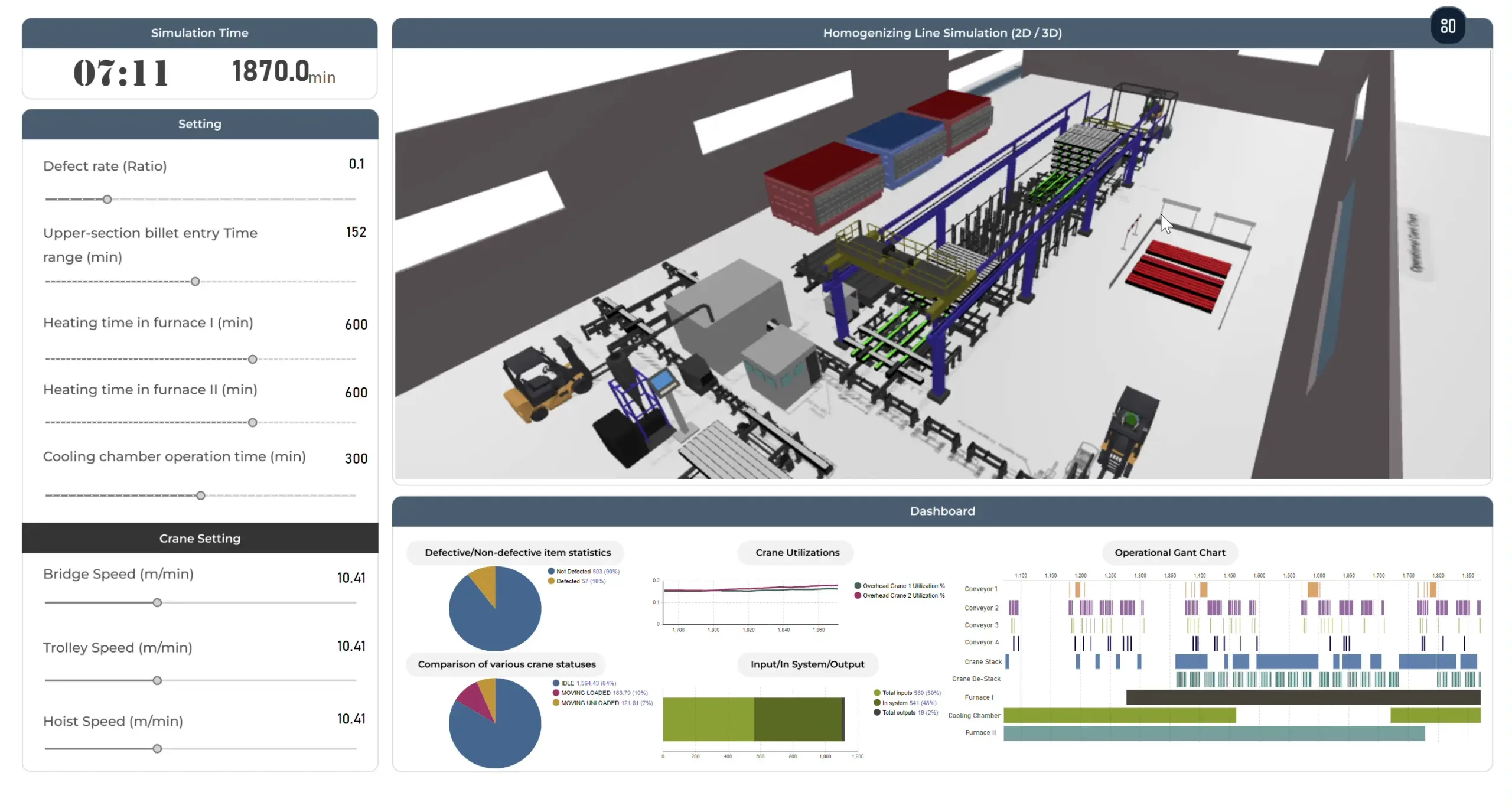
- Full production-line simulation to assess expanded capacity and workflow impacts by building a dynamic simulation model of the complete homogenizing line.
- Engineering validation through time-study checks and equipment-performance testing under real operating conditions and full production cycles.
- Scenario modeling for billet sizes, peak loads, and downtime conditions, including running alternative crane specifications with different trolley speeds and load capacities.
- Detection of optimization areas in crane use, transfer flow, and material handling, identifying that the original gantry crane trolley speed was not fast enough.
- Confirmation that expanded capacity operates without blockages by removing the bottleneck at the design stage.
- Clear optimization actions for improving handling and line efficiency, with the optimal specification identified and validated before procurement.
- Real-time KPI insights to detect bottlenecks and improve flow, showing that the crane became a chokepoint under peak load.
- More reliable production planning through dynamic scenario analysis, allowing the production line to meet capacity targets from commissioning day one without post-installation rework.
In-Depth Documentation
What AlsanX Did
AlsanX built a dynamic simulation model of the complete homogenizing line—modelling the timing, movement, and interaction of every piece of equipment under real operating conditions, including variability. The simulation immediately revealed that the gantry crane trolley speed was not fast enough to keep up with the demands of the three furnaces running simultaneously, creating a peak-load chokepoint. AlsanX then ran the model with alternative crane specifications (different trolley speeds and load capacities) until the bottleneck was eliminated, presenting the revised specification to the client before any purchase orders were placed.
The Outcome
The gantry crane specification was changed before procurement, removing the bottleneck at the design stage. The client received a production line that performed at capacity from day one, completely avoiding the cost and delay of discovering the problem during commissioning or after installation. The engineering decision was backed by simulation data rather than intuition, and the entire project was delivered within approximately one week of the initial audit.
What the simulation found
- Gantry crane trolley speed was the system bottleneck under peak load
- The constraint only appeared under dynamic operating conditions — invisible in static review
- Two alternative crane specifications were modelled and compared
- Optimal specification identified and validated before procurement
What this means in practice
- No post-installation rework or crane replacement
- Production line met capacity targets from commissioning day one
- Engineering decision backed by simulation data, not intuition
- Delivered within approximately one week of the initial audit
Tools & Technologies
Explore more case studies
See how we've applied these methods across logistics, manufacturing, and beyond.
View All Case Studies →