
When the Warehouse Runs Out of Hours: How Simulation Balanced a GCC Operation
A food distribution company supplying chain supermarkets utilized a full-operation simulation and parametric resource model to balance daily staffing and operational workflows across 14 lanes. This systematic approach eliminated equipment battery depletion risks and ensured all inbound and outbound cycles were completed within a single 8-hour shift.
Inside the Bottleneck: Unpredictable Labor Costs and a Race Against the 8-Hour Shift Clock
A food distribution company supplying chain supermarkets was facing a compounding operational challenge in its warehouse. Every day, the facility ran two parallel processes — Inbound (receiving and storing incoming goods) and Outbound (order picking and truck loading for outgoing deliveries) — with a workforce that mixed permanent staff and daily casual labour, a fleet of battery-powered equipment, and 14 active picking lanes running simultaneously.
Three problems were converging at once:
- Unpredictable Casual Labour Costs: Without a reliable model, the team was over-ordering day workers to hedge against uncertainty, driving labour costs higher than necessary without knowing exactly where the operational slack was.
- Overtime and Unbalanced Workloads: Daily operations regularly exceeded the planned 8-hour shift window. Equipment, staff, and processes were not balanced across the 14 lanes, meaning some lanes finished early while others ran long, pulling the entire operation into overtime.
- Floor Congestion: Pallets, trolleys, reach trucks, pallet trucks, and order pickers shared the same space without a managed flow logic. This created friction, delays, and near-miss conflicts between moving vehicles.
Images & Video
Challenges · Solution · Results
- Unpredictable and inflated casual labour spend from over-ordering day workers to hedge against uncertainty.
- Daily operations regularly exceeding the planned 8-hour shift window, triggering costly overtime.
- Severe floor-level congestion and near-miss vehicle conflicts due to unmanaged flow logic.
- High risk of battery-powered equipment running to depletion mid-shift due to highly unbalanced lane workloads.
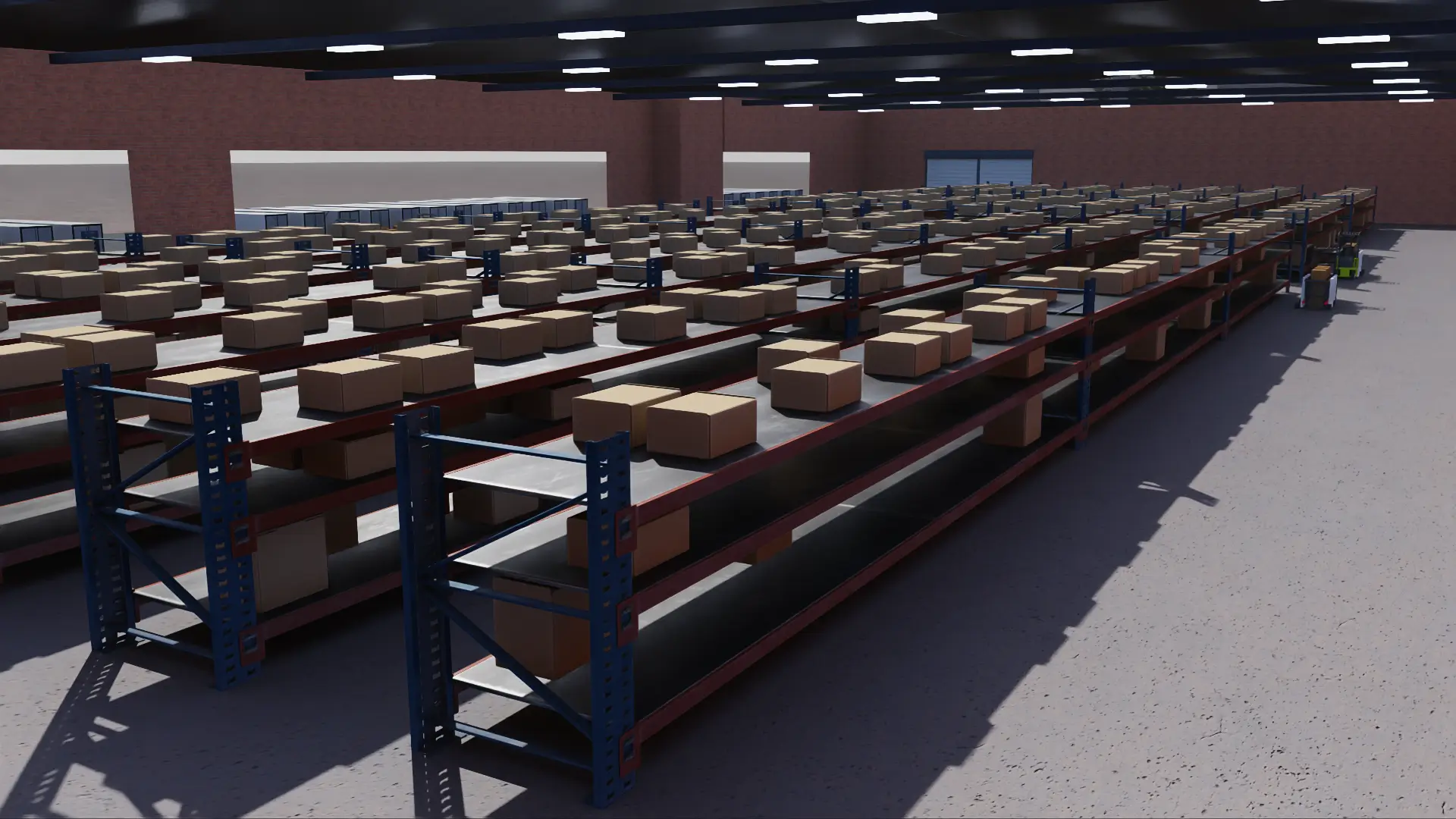
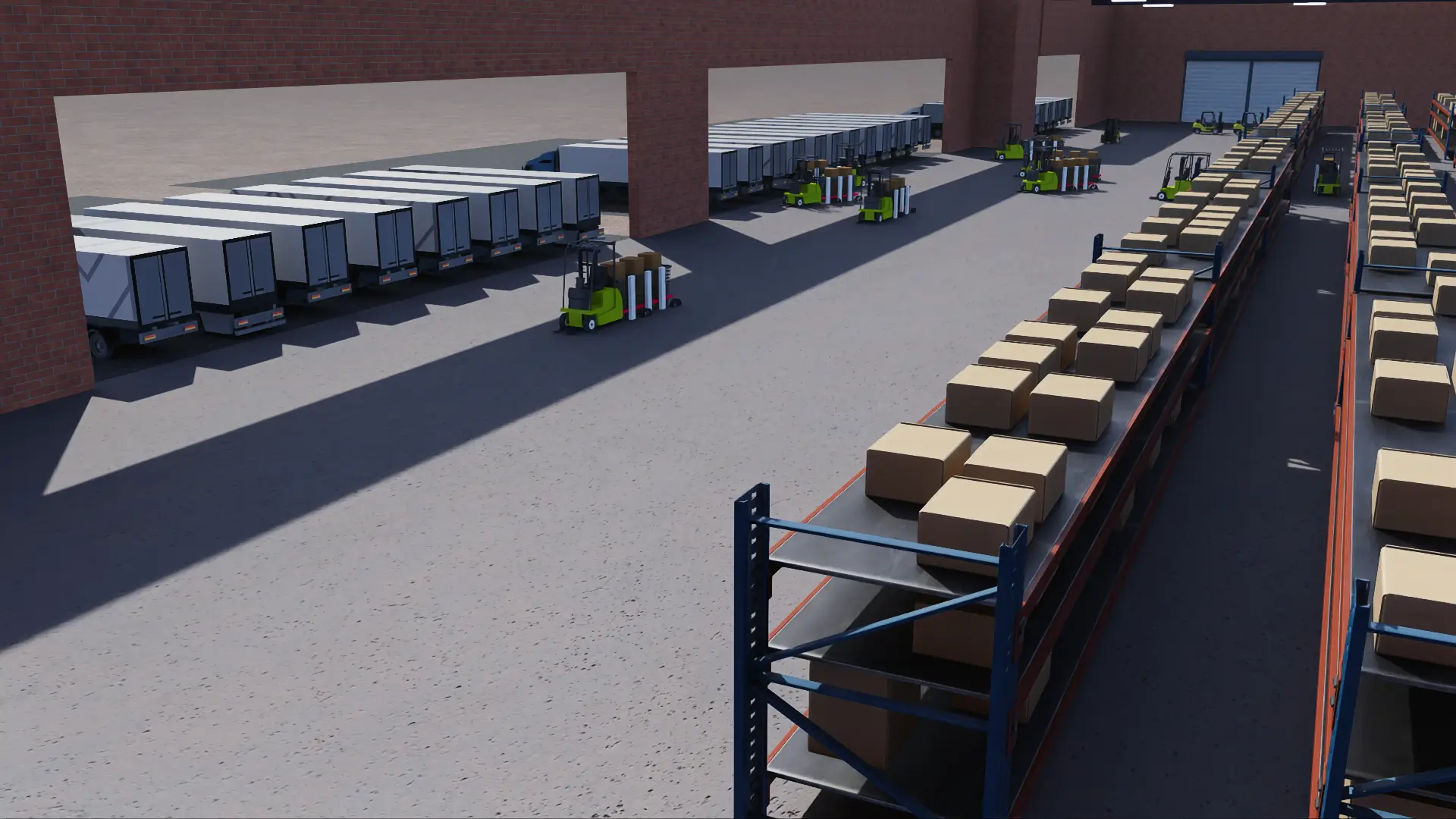
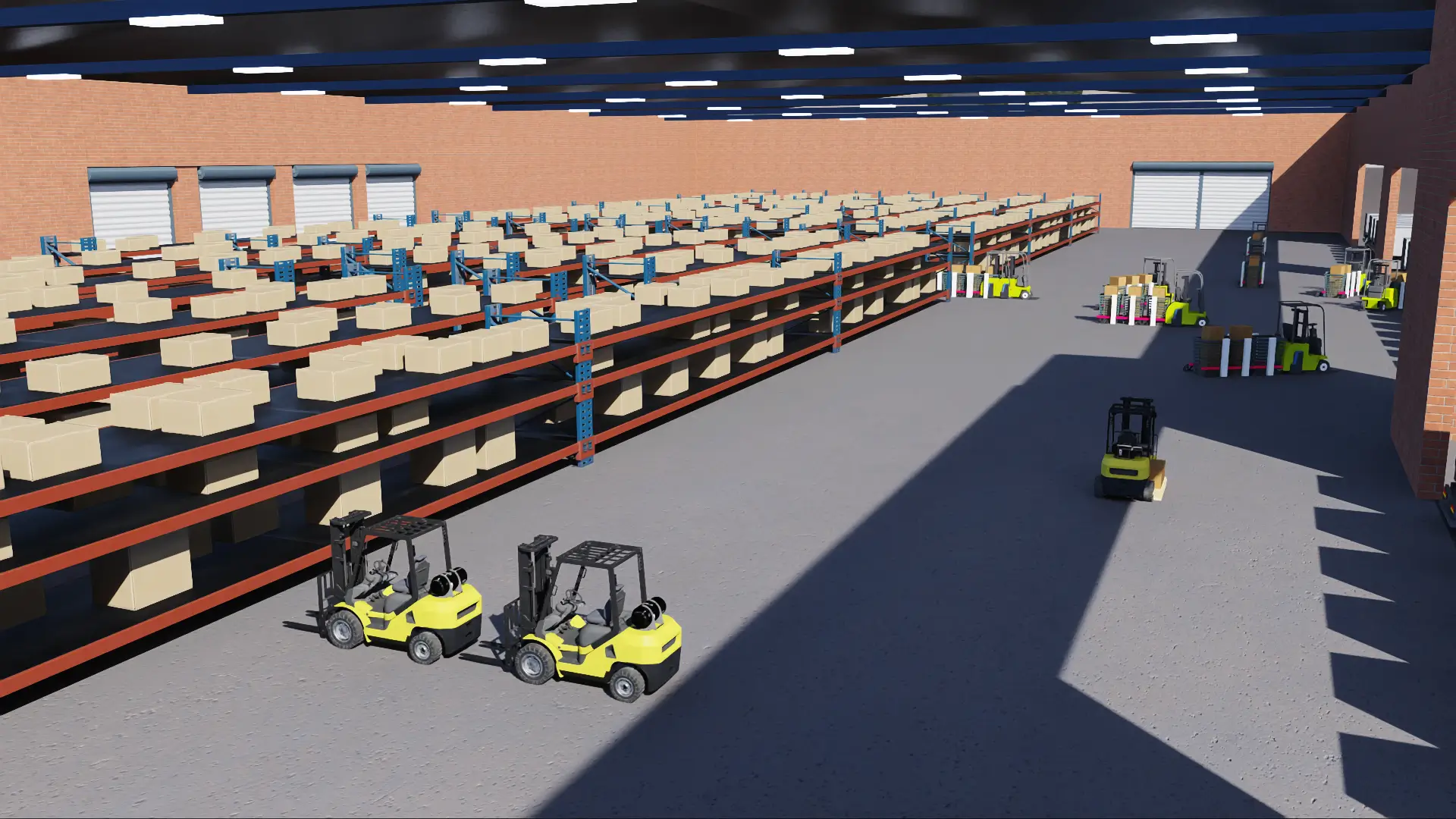
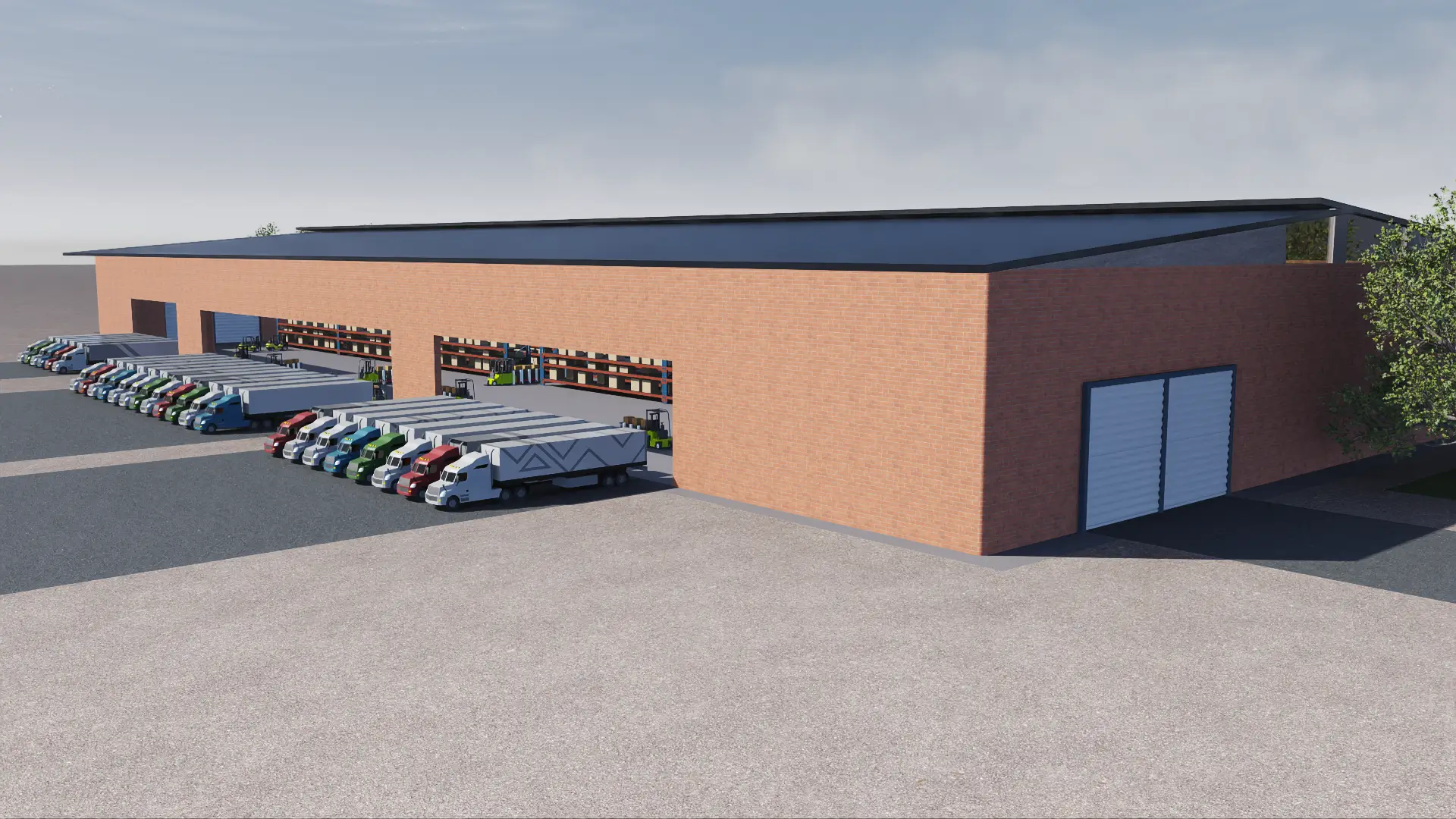
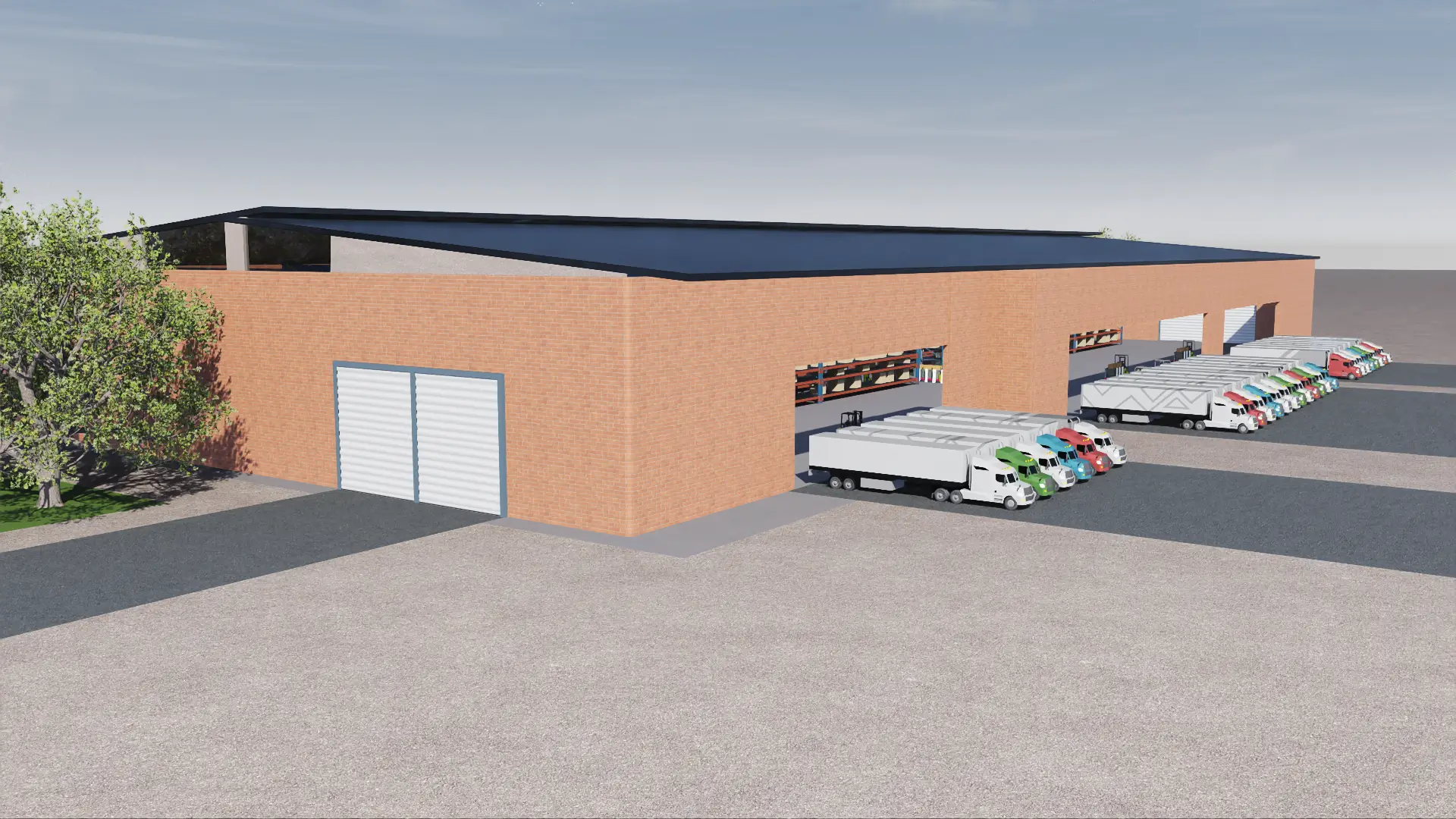
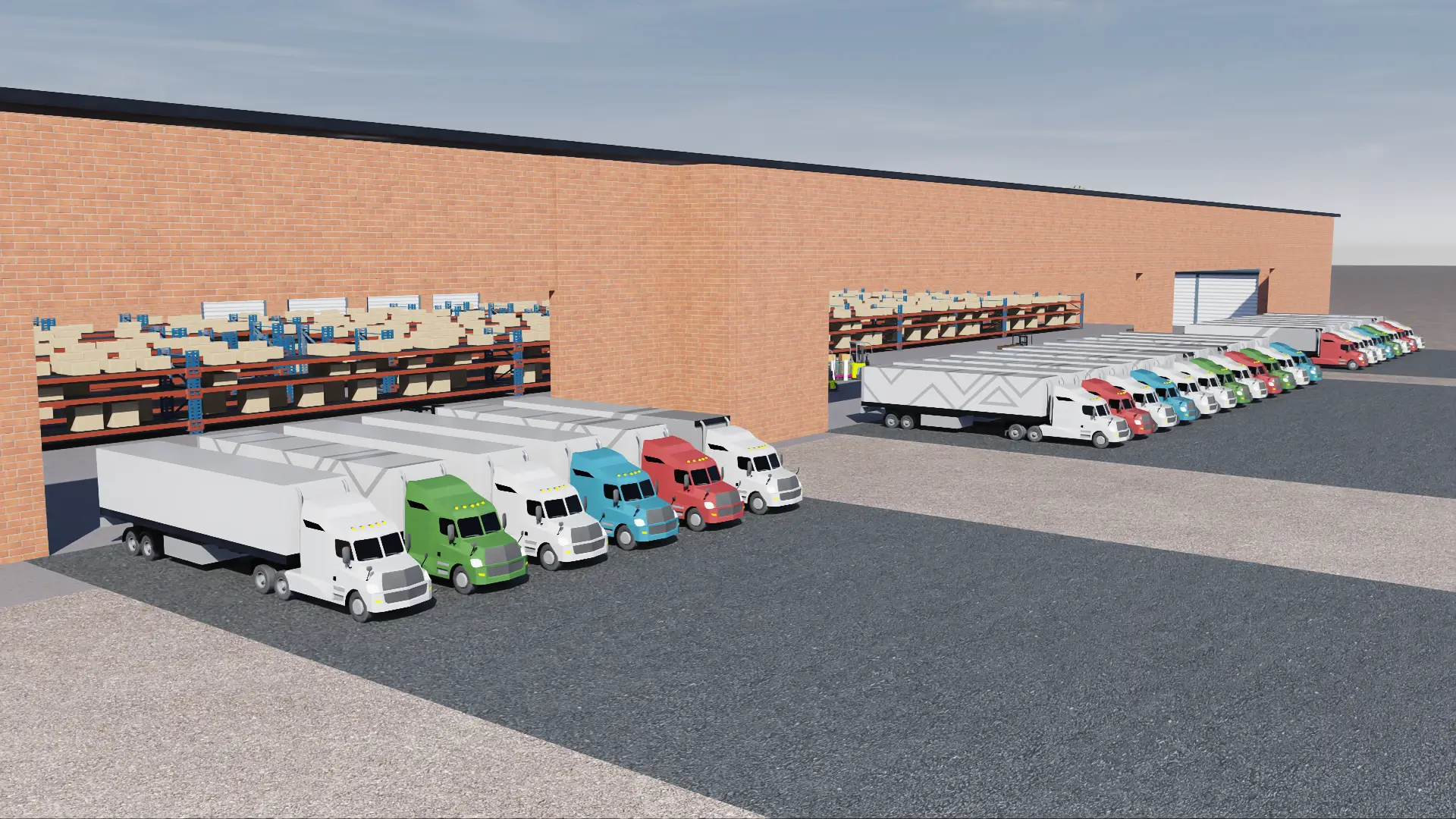
- Full-Operation Simulation: Built a complete simulation of inbound and outbound flows, using a 3D model in NVIDIA Omniverse for spatial clarity on aisle conflicts and equipment routing.
- Parametric Resource Model: Developed a data-driven staffing model that calculates exact casual worker needs based on daily order volume and configuration.
- Collaboration Matrix: Established cross-utilisation logic allowing workers to switch to supporting roles across the 14 lanes, balancing equipment utilization and preserving battery charges.
- Buffer Management: Defined capacity thresholds at key transition points to control pallet/trolley density and prevent gridlocks.
- Fleet Optimisation: Re-sequenced and optimized outgoing truck schedules so each vehicle carried multiple delivery runs, reducing the overall truck count.
- Completed full daily inbound and outbound operations reliably within the 8-hour shift window.
- Achieved an approximate 12–15% reduction in resource utilisation through precise scheduling and staff cross-utilisation.
- Entirely eliminated the risk of mid-shift equipment battery depletion.
- Brought warehouse floor congestion under control using structural buffer thresholds and managed routing patterns.
- Systematized casual labour procurement to calculate exact numbers per day, avoiding costly over-ordering.
- Optimised fleet routing to minimize the total outbound truck count.
In-Depth Documentation
What AlsanX Did
AlsanX built a complete simulation of the warehouse covering both Inbound and Outbound flows, modelling every resource—from trucks and reach lifts to permanent and casual workers. To provide spatial clarity, a 3D model was built in NVIDIA Omniverse, making congestion patterns and routing friction visible before physical changes were made. At the core of the solution, AlsanX implemented a parametric resource model that replaces guesswork with exact calculations for daily casual labour requirements based on daily order volume. Furthermore, a collaboration matrix was engineered to allow cross-lane support; this evenly distributed the workload across all 14 lanes, resolving a critical constraint where battery-powered equipment previously ran to depletion mid-shift. Finally, floor-level congestion was resolved through intermediate buffers with strict capacity thresholds, while outbound fleet schedules were optimized to maximize parts carried per shift and minimize total vehicle counts.
The Outcome
The simulation produced a complete, validated operational plan for the warehouse covering resource allocation, scheduling, collaboration rules, buffer management, and fleet routing. Daily operations successfully retracted into the standard 8-hour shift window, eliminating costly overtime. Resource utilisation dropped by approximately 12–15% due to exact casual labour alignment and strategic cross-utilisation of permanent staff. Equipment battery depletion during live operations was entirely eliminated as a operational threat, and floor congestion was controlled via proactive buffer thresholds. Ultimately, the client transitioned from reactive, observation-based adjustments on a live floor to data-driven, strategic planning.
What the Simulation Delivered
- Daily casual labour requirement calculated per day — no more over-ordering
- Full Inbound and Outbound cycle completed within an 8-hour shift
- Collaboration matrix balancing workload across all 14 lanes
- Battery depletion risk eliminated through even equipment utilisation
- Buffer thresholds preventing floor congestion and vehicle conflicts
- Fleet routing optimised to minimise outbound truck count
What the Client Avoided
- Unpredictable and inflated casual labour spend
- Overtime costs from operations running past the shift window
- Equipment blocking active aisles due to depleted batteries mid-shift
- Trial-and-error adjustments on a live warehouse floor
- Congestion delays cascading through inbound and outbound flows
- Decisions based on observation rather than operational data
Tools & Technologies
Is your warehouse operation running longer than it should?
Ask us for a Bottleneck Audit.
Get in Touch →Explore more case studies
See how we've applied these methods across logistics, manufacturing, and beyond.
View All Case Studies →