What a Human-Centric Digital Twin Did Before an Aluminium Line Went Live
A simulation-powered commissioning study that validated line capacity, tested blockage risk, and trained operators in VR before the first billet moved on the real line.
A Digital Twin for Safer Aluminium Line Commissioning
A new aluminium billet homogenizing line was approaching commissioning, but the engineering team needed to answer two critical questions before the line went live: would the designed configuration handle the most demanding 7-inch billet scenario without blockage, and would the operators be ready to run the equipment safely from day one?
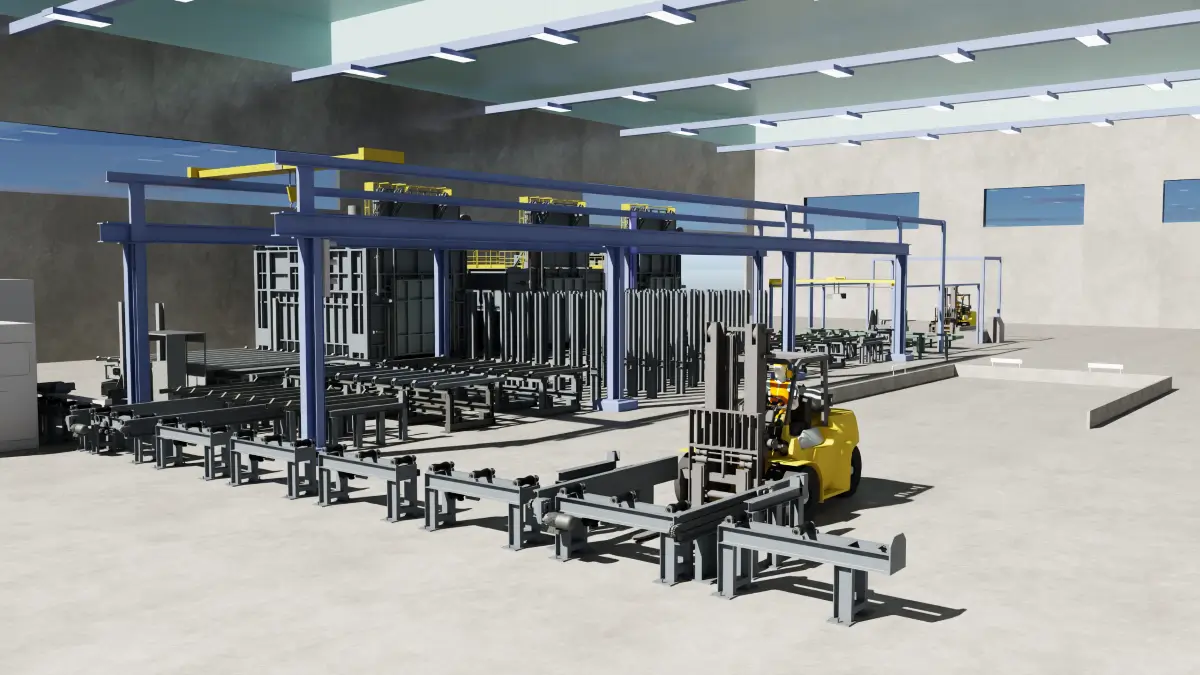
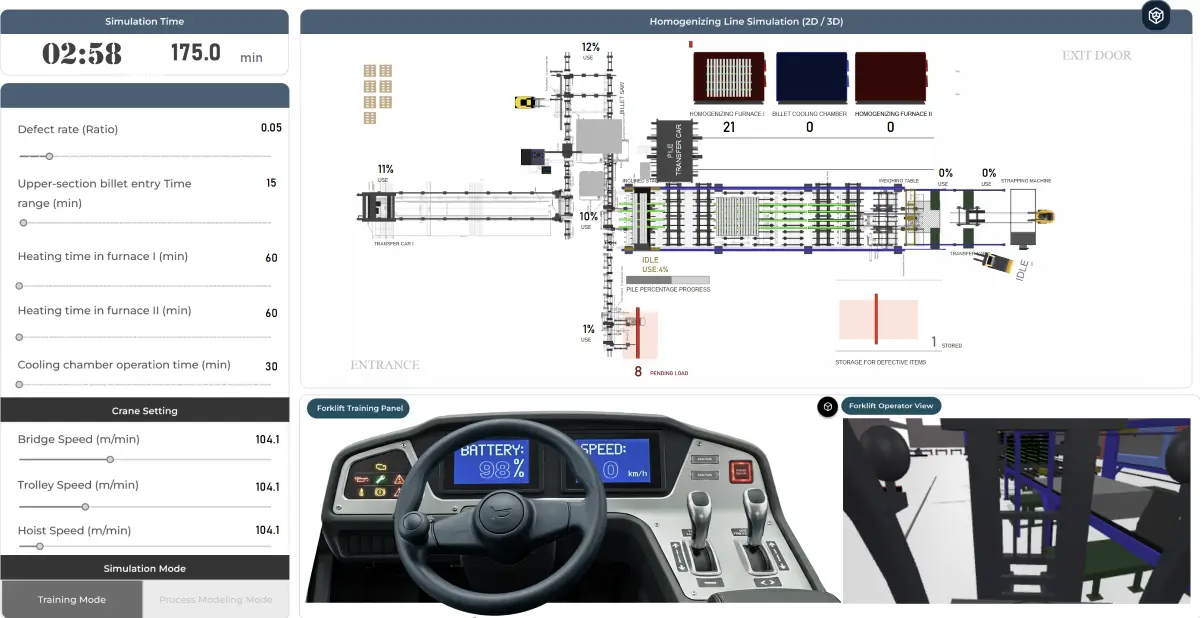
AlsanX developed a simulation-based digital twin of the complete homogenizing process, covering billet input, testing, defect removal, stacking, furnace charging, homogenizing cycles, cooling, stripping, and final dispatch. The model tested line flow, equipment timing, transfer constraints, defect-rate variability, and operator interactions before any physical trial was performed on the real line.
The result was a commissioning-ready validation environment that confirmed the line could operate without blockage in the critical scenario, identified charging machine availability as the most time-sensitive constraint, and enabled forklift and charging machine operators to train in VR before touching the live equipment.
Images & Video
Challenges · Solution · Results
- Coordinating furnace cycles, transfer car movements, crane operations, and cooling chamber capacity within tight timing windows.
- Preparing forklift and charging machine operators before their first real interaction with the physical line.
- Quantifying the throughput impact of variable billet defect rates and rejected billets.
- Preventing blockage, accumulation, or starvation across a sequential high-temperature production system.
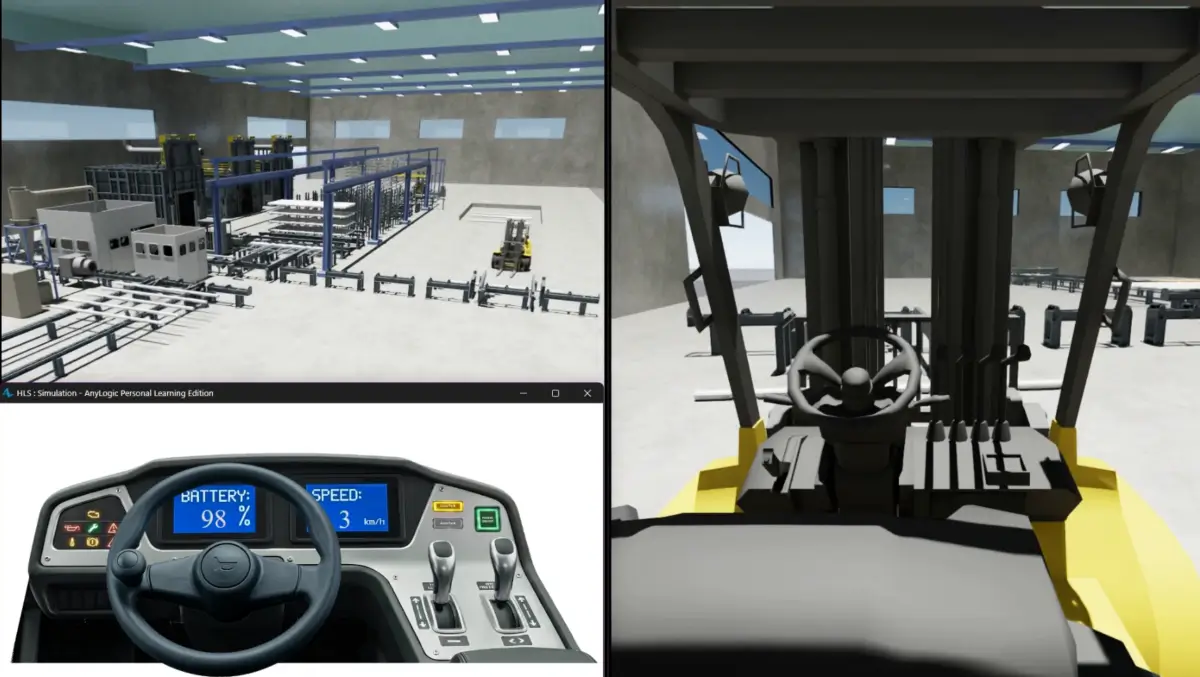
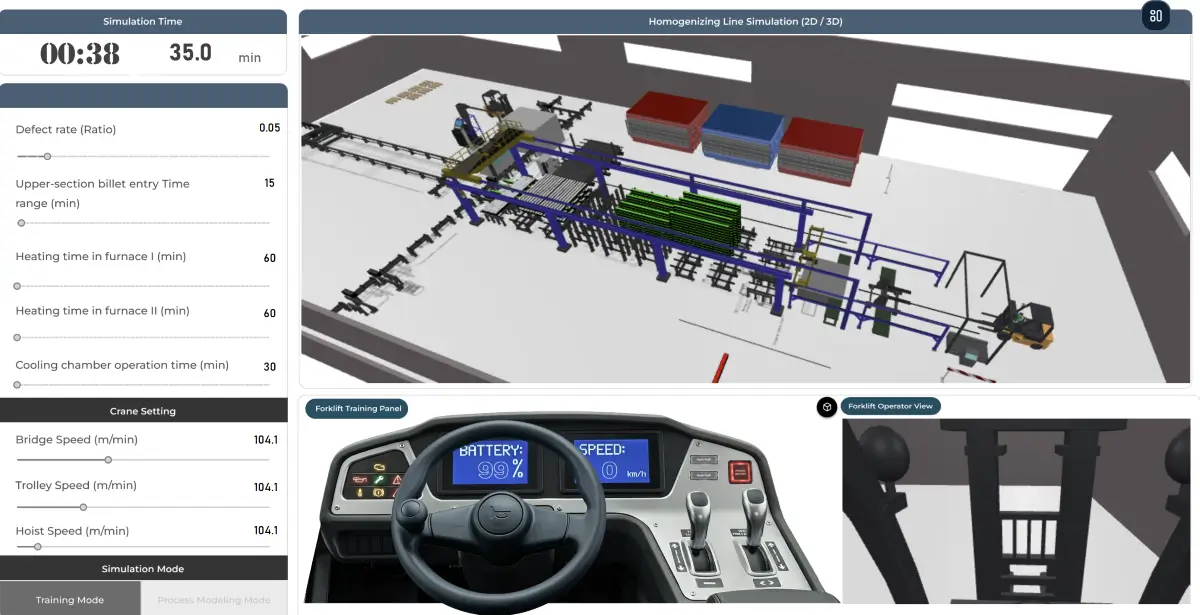
- Developed an interactive NVIDIA Omniverse VR environment for forklift and charging machine operator training.
- Added variable defect-rate scenarios to measure the impact of rejected billets on throughput and daily output.
- Mapped furnace cycles, transfer car movements, crane operations, cooling chamber capacity, and charging machine timing.
- Operational risks were tested in a virtual environment before any physical trial on the live line.
- Forklift and charging machine operators trained on realistic scenarios before touching the real equipment.
- The client avoided trial-and-error adjustments on a live, high-temperature production line.
- The model quantified how billet defect rates could affect throughput and daily output.
In-Depth Documentation
What AlsanX Did
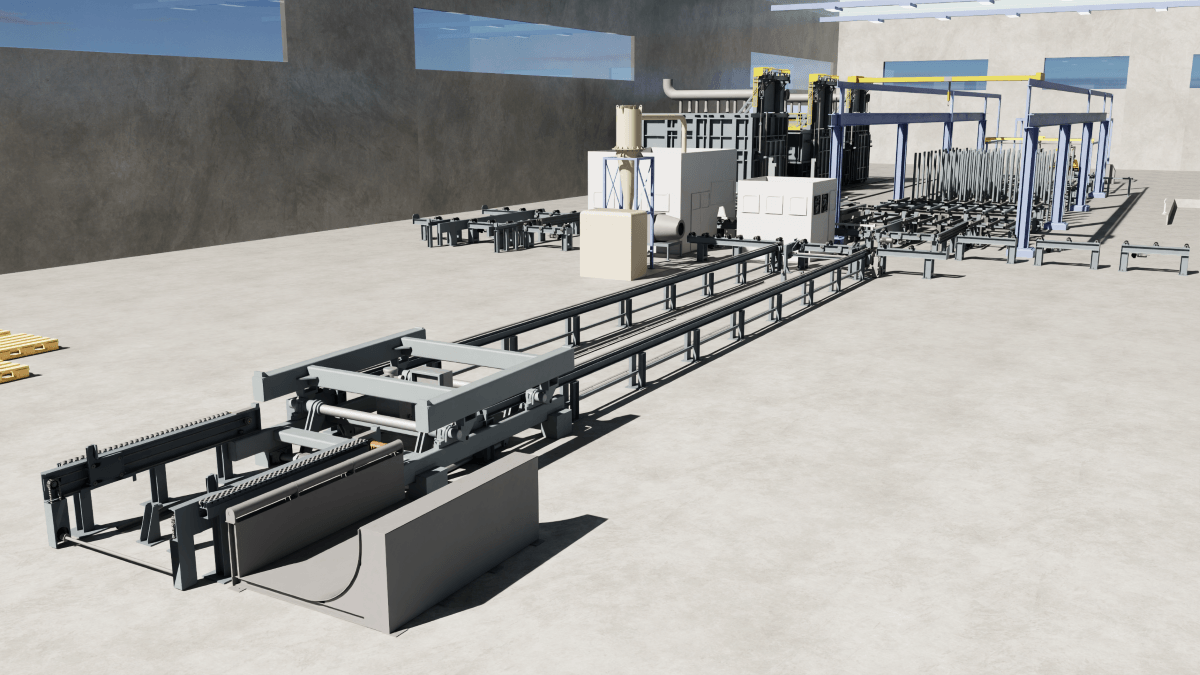
AlsanX built a full discrete-event simulation model of the aluminium billet homogenizing line, covering the complete process from billet input, testing, defect removal, stacking, and furnace charging to homogenizing, cooling, stripping, and final dispatch. The model captured the actual operating logic of the line, including furnace capacity, transfer car movements, crane cycles, charging machine timing, cooling chamber throughput, and variable billet defect rates. The simulation was then connected to a 3D NVIDIA Omniverse environment to support interactive operator training before commissioning.
What the Digital Twin Platform Revealed
The simulation confirmed that the designed line configuration could handle the critical 7-inch billet scenario without creating a blockage. It also showed how tightly the line depended on the timing of furnace availability, transfer car movements, crane operations, and charging machine performance. Charging machine availability was identified as the most time-sensitive constraint, while defect-rate analysis showed how rejected billets could affect throughput, work-in-progress levels, and daily output.
What the Client Avoided
By testing the line virtually before commissioning, the client avoided discovering blockage risks, sequencing issues, or capacity limitations on a live high-temperature production line. The project reduced the need for trial-and-error adjustments during start-up and helped the engineering team validate the design before physical operation began. It also allowed the client to understand the effect of non-ideal input quality, equipment timing misalignment, and operational delays without risking equipment, product, or personnel.
How Operator Readiness Was Built Before Go-Live
The VR training environment allowed forklift and charging machine operators to experience the line before touching the real equipment. Operators could practise movement sequencing, billet handling, equipment positioning, furnace charging logic, and responses to abnormal conditions inside a risk-free virtual replica of the plant. Instead of learning for the first time during commissioning, they entered the live line with prior exposure to the equipment, process flow, spatial constraints, and operational decisions they would face on day one.
Tools & Technologies
Need your operators ready before go-live?
Train teams inside a risk-free VR environment before they touch the real equipment.
Get in Touch →Explore more case studies
See how we've applied these methods across logistics, manufacturing, and beyond.
View All Case Studies →