Simulating a 3-Million-Ton Steelworks From the Ground Up
Validating production layouts and capacity targets for a major greenfield steelworks project by bridging the gap between discrete melting and continuous casting processes.
The Problem: Connecting Discrete Melting to Continuous Casting
The design team for a major new steelworks was facing one of the most complex challenges in steel plant engineering: how do you connect a fundamentally discrete process—electric arc furnace (EAF) melting—to a fundamentally continuous one—continuous casting—at 3 million tonnes per year, while simultaneously producing multiple grades of alloyed steel?
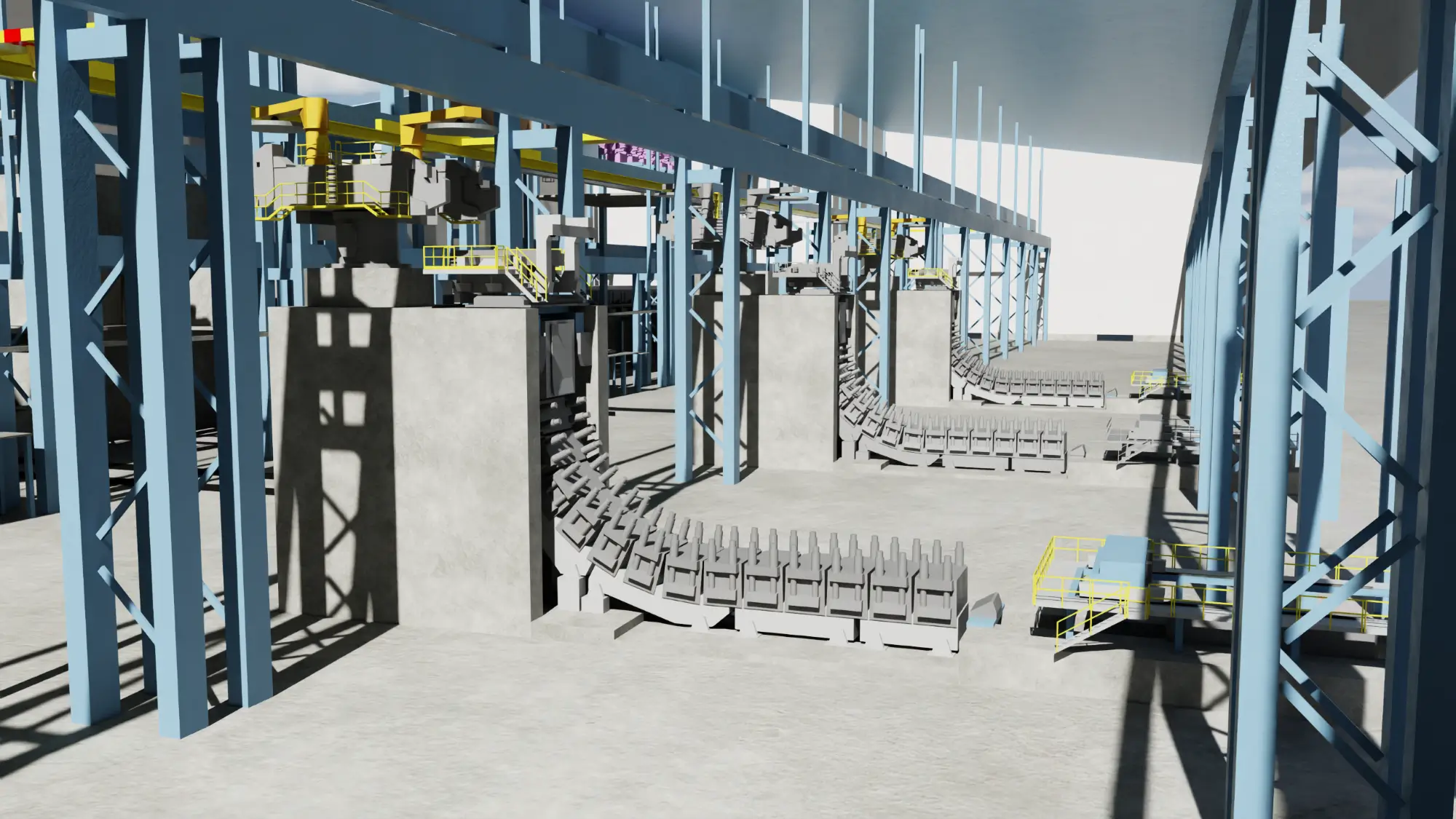
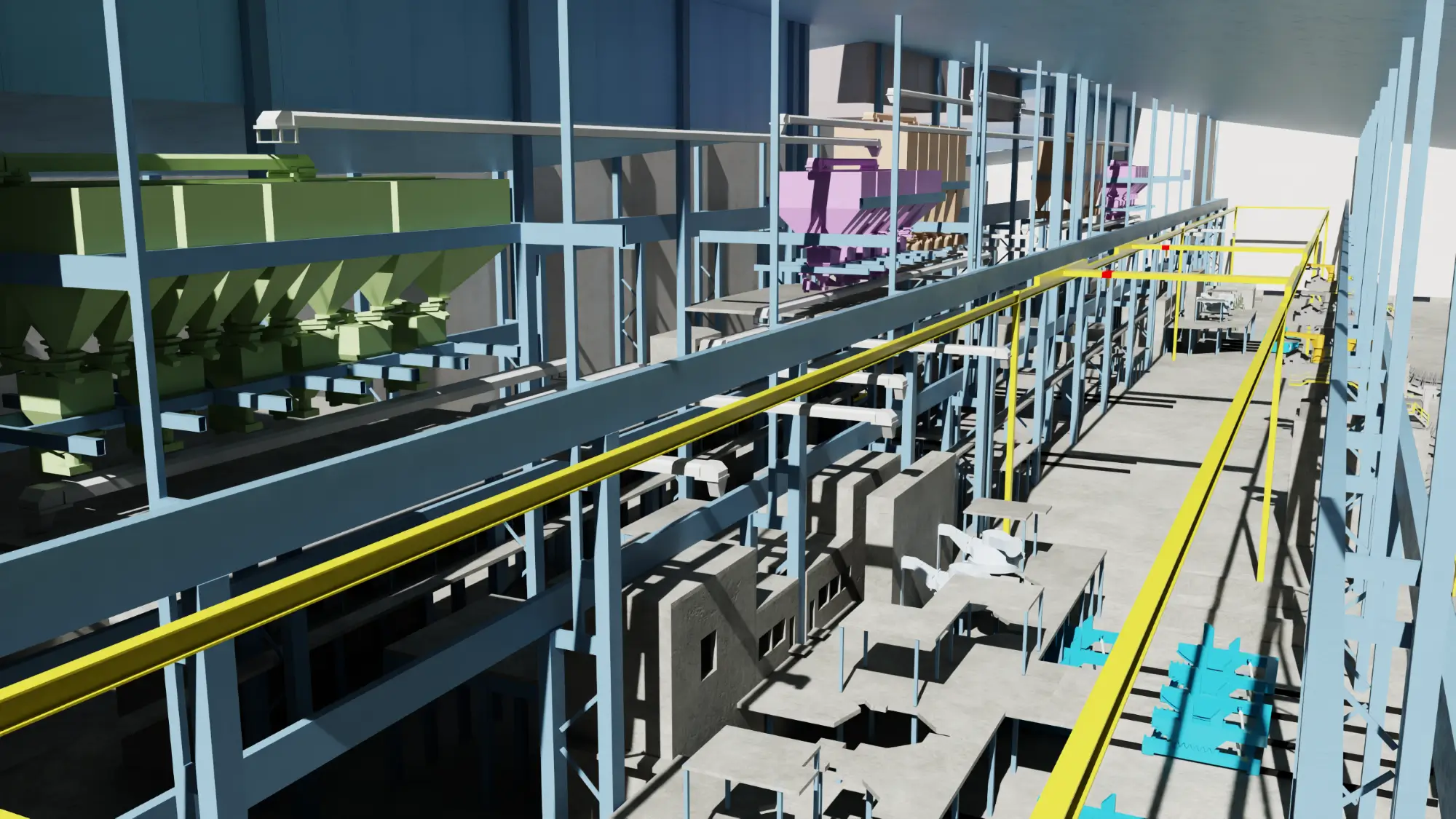
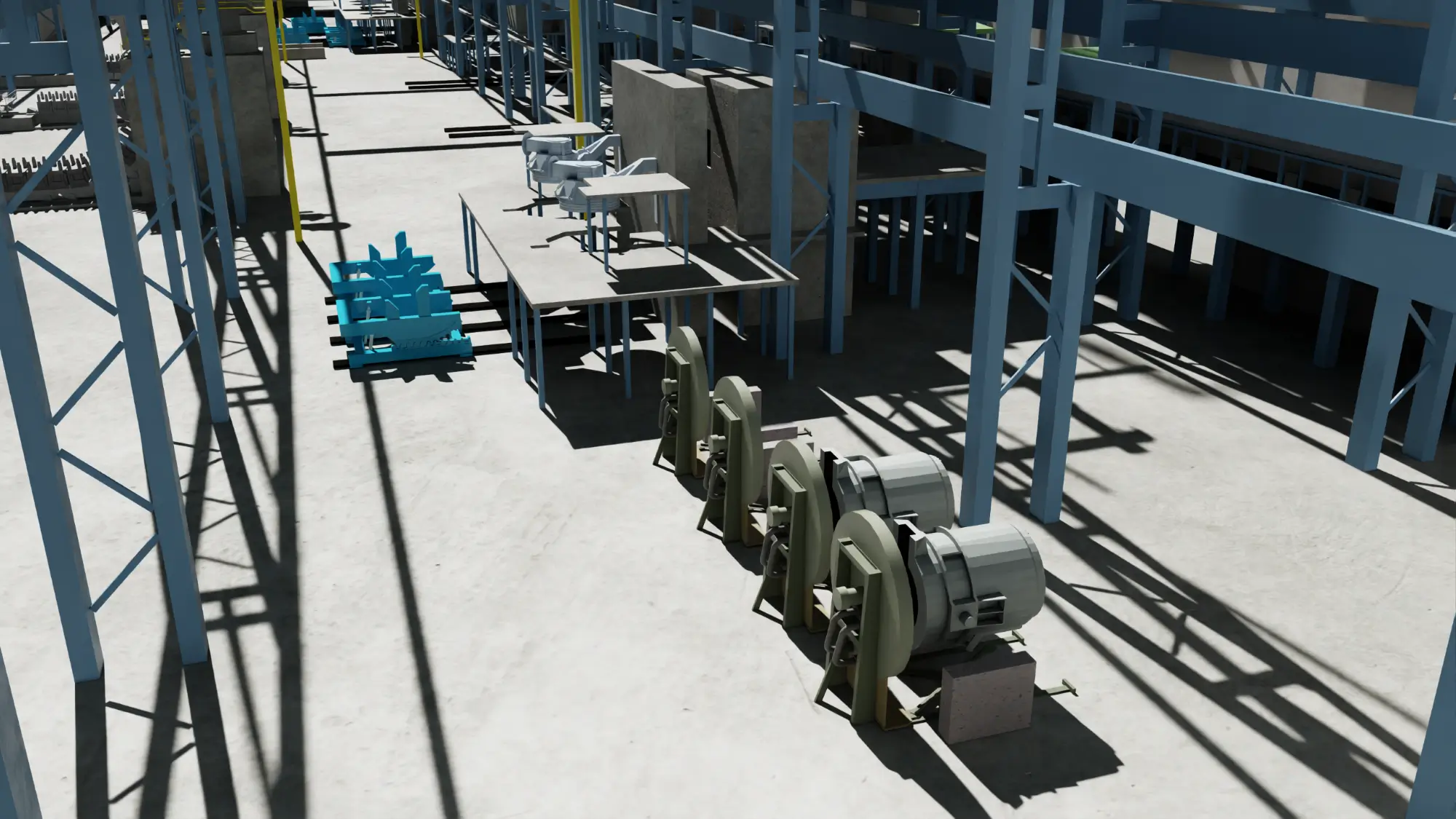
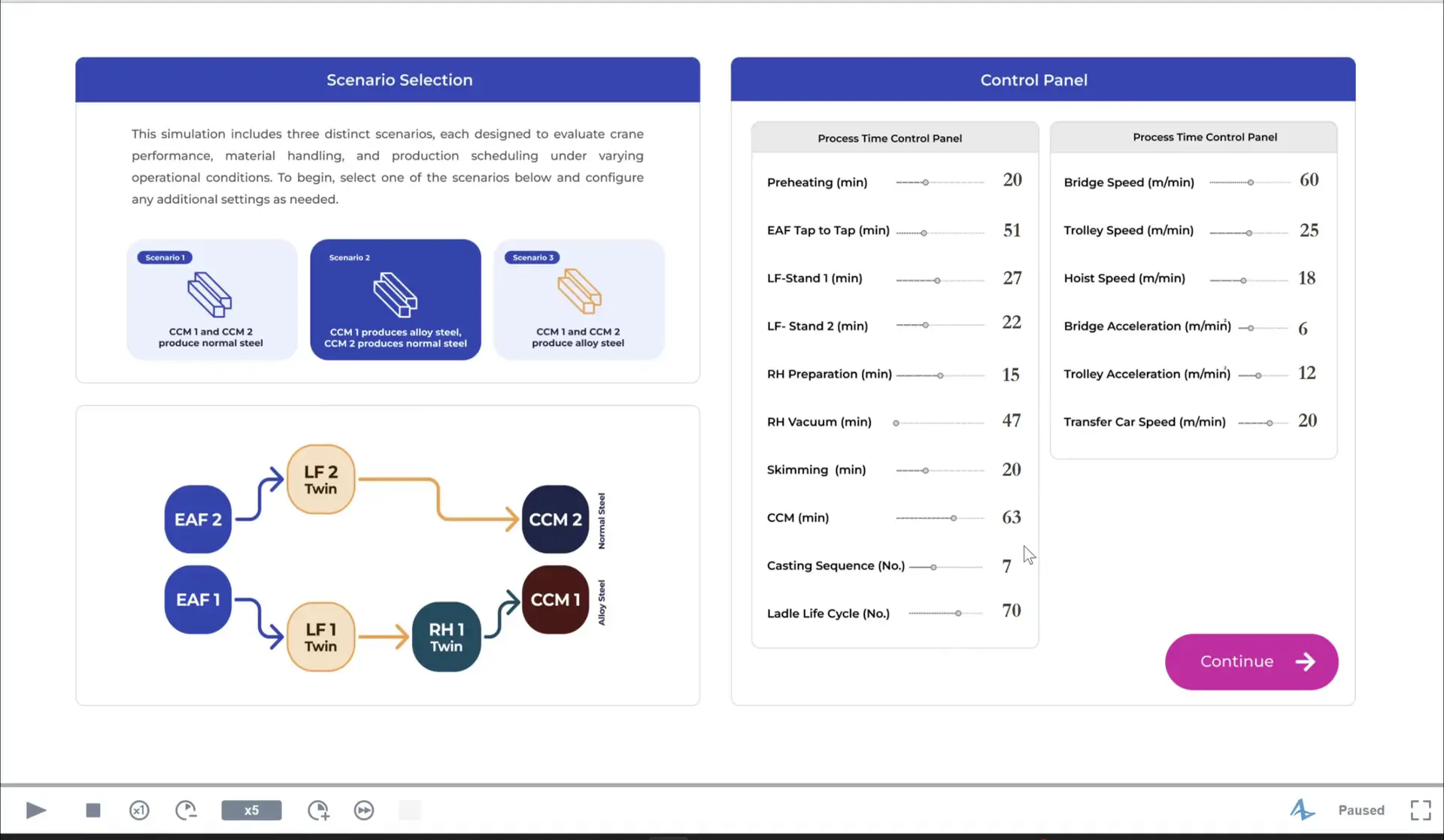
The plant configuration was highly complex, containing two EAFs, four ladle furnaces (LF), two vacuum oxygen degassers (VOD), and three continuous casters, each with different cycle times. Two different plant layout arrangements had been proposed by the engineering team. Before committing capital to either, the client needed to know which layout could actually reach the 3 million tonne target—and under what conditions.
Images & Video
Challenges · Solution · Results
- Complex EAF–CCM interactions make manual planning inefficient.
- Variations in material, cycle times, and downtime cause bottlenecks.
- Limited real-time insight leads to energy loss and inconsistent schedules.
- The casters required a constant supply of liquid steel at the right temperature, while the furnaces worked in bursts.
- The mix of alloy grades meant production sequences could not simply be optimized for one product—they had to work simultaneously for several.
- When the first layout was run in simulation, it fell far short of the capacity target due to the fundamental arrangement of equipment.
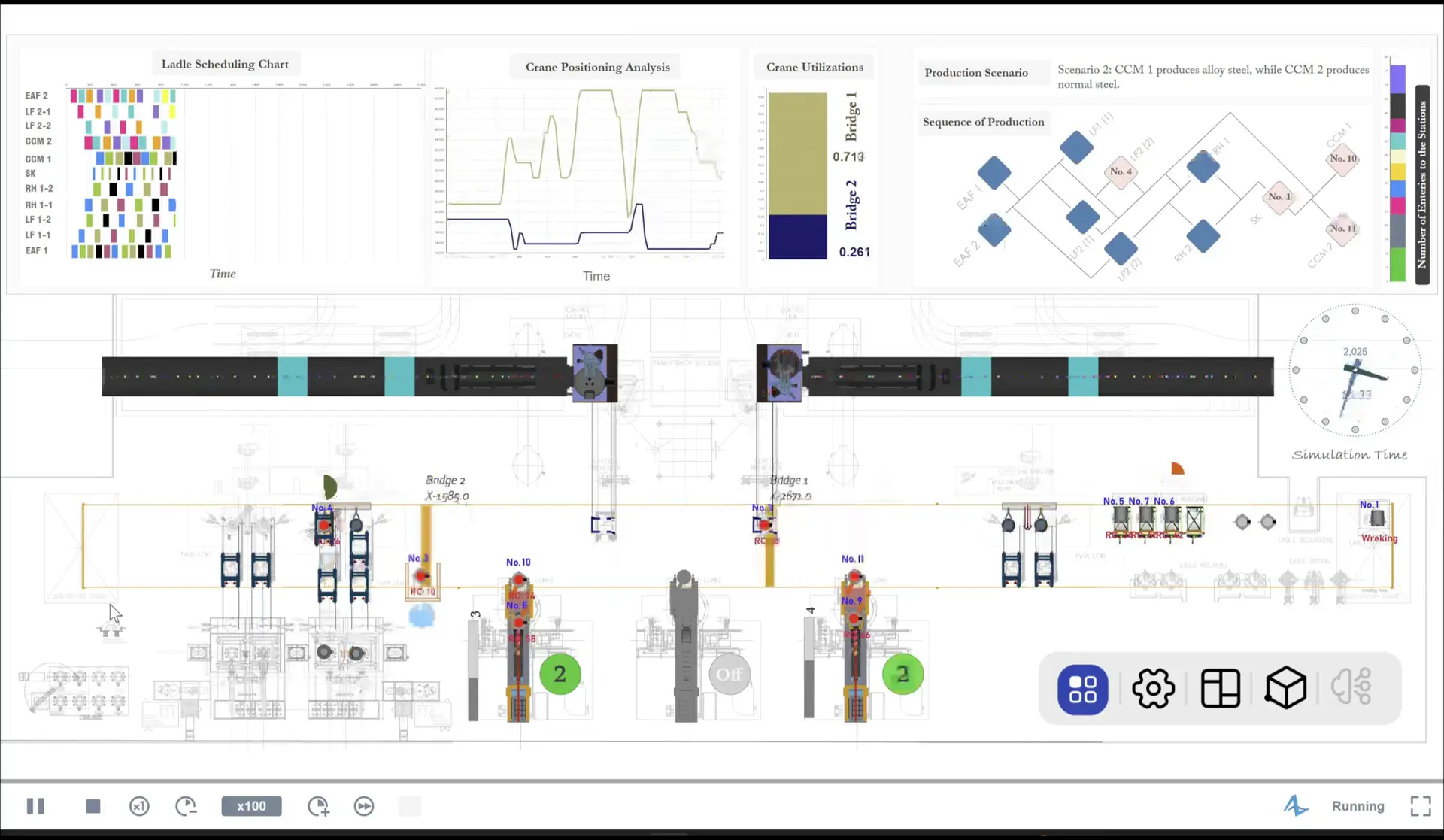
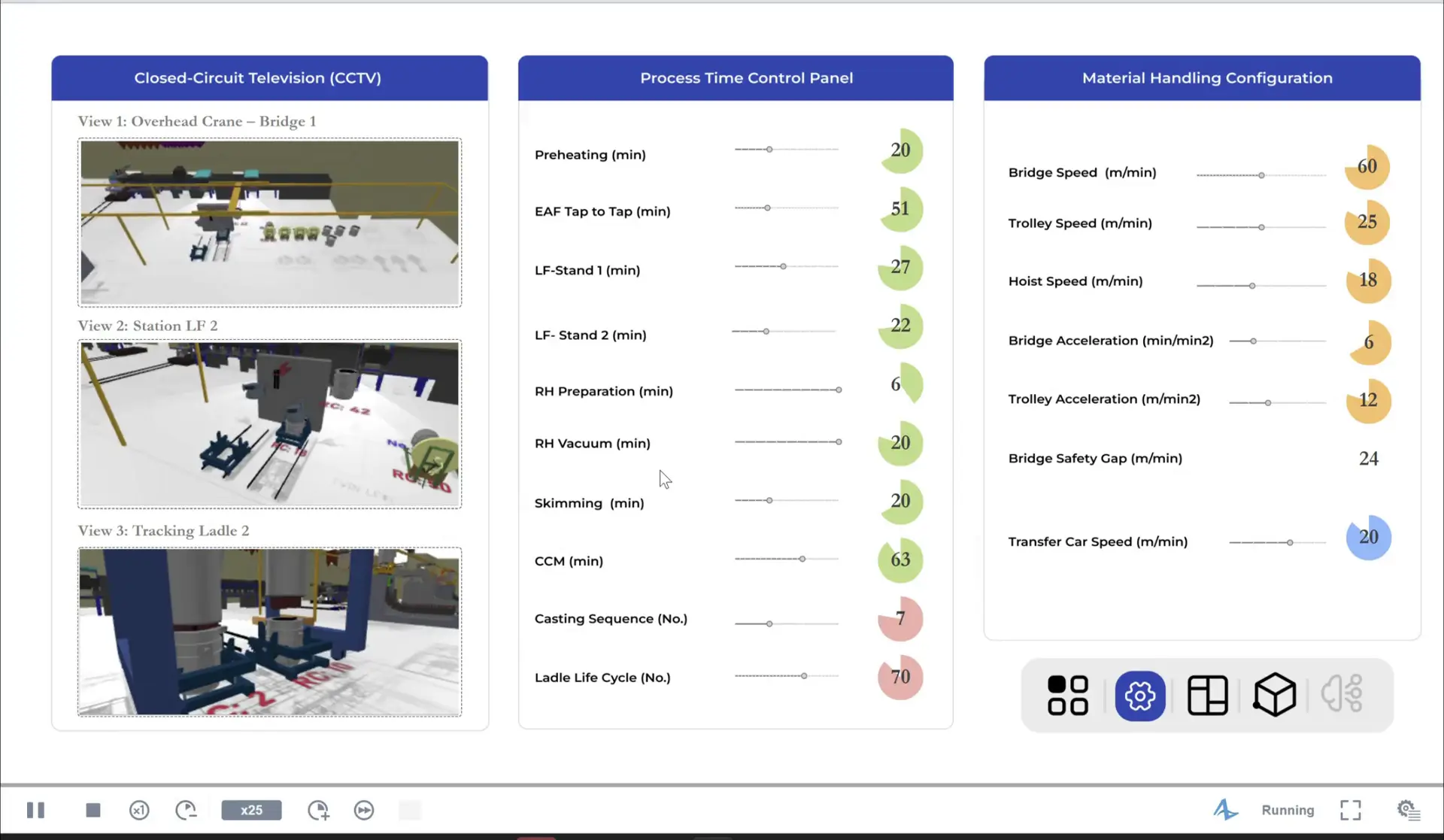
- Built a full simulation model of both proposed layouts, capturing the complete production logic: furnace cycling, ladle scheduling, VOD processing sequences, caster feeding requirements, temperature constraints, and material flow between every unit.
- Applied a holistic optimization approach, simultaneously adjusting the logistics sequences, the equipment capacity parameters, and the production scheduling across two different worst-case scenarios.
- Implemented an AI-driven scheduling engine generating optimized, constraint-aware plans.
- Utilized live data integration from furnaces, ladles, materials, and CCMs.
- Deployed scenario simulation to evaluate alternatives and identify bottlenecks.
- Embedded predictive analytics for delay forecasting and route optimization.
- Proved that the 3M tonne target was achievable before ground was broken.
- Eliminated the first layout from consideration before any capital was committed to it.
- Redesigned the second layout based on simulation findings and proved it capable of meeting the capacity target.
- Found a production solution that conventional engineering review had not found, bridging the fundamental process discontinuity.
- Reduced idle time and improved synchronization between EAFs and CCMs.
- Achieved higher throughput with steadier material flow and lower energy waste.
- Delivered better managerial visibility through KPI-driven insights.
In-Depth Documentation
What AlsanX Did
AlsanX built a full simulation model of both proposed layouts, capturing the complete production logic: furnace cycling, ladle scheduling, VOD processing sequences, caster feeding requirements, temperature constraints, and material flow between every unit. After the first layout failed due to physical equipment constraints, AlsanX applied a holistic optimization approach to the second layout. This involved simultaneously adjusting logistics sequences, equipment capacity parameters, and production scheduling across two different worst-case scenarios to achieve continuous caster feeding from discrete EAF operations.
The Outcome
The client received a simulation-validated production solution for a 3-million-tonne steelworks that had not existed before the engagement. The first layout was eliminated from consideration before any capital was committed to it. The second layout was redesigned based on simulation findings and proven capable of meeting the capacity target, successfully bridging the fundamental process discontinuity between EAF and continuous casting.
Complexity Handled
- Sequence Modeling: 2x EAF + 4x Ladle Furnace + 2x VOD + 3x Casters all modeled in sequence.
- Simultaneous Production: Multiple alloy grades produced simultaneously.
- Thermal Constraints: Temperature constraints on liquid steel maintained throughout.
- Comparative Evaluation: Two full layout options simulated and compared.
- Stress Testing: Two worst-case production scenarios stress-tested.
What the Client Received
- Clear Recommendation: Layout recommendation backed by simulation, not opinion.
- Redesigned Logistics: Redesigned logistics and capacity solution for the viable layout.
- Early Proof: Proof that the 3M tonne target was achievable before ground was broken.
- Innovative Engineering: A solution that conventional engineering review had not found.
Tools & Technologies
Explore more case studies
See how we've applied these methods across logistics, manufacturing, and beyond.
View All Case Studies →