
How Simulation Eliminated a Steel Plant's Entire Truck Queue
Simulation-driven analysis of internal traffic, storage management, and material movement efficiency
The Problem: Chronic Congestion and Unvalidated Decisions
A steel plant was experiencing chronic congestion at its truck entry and exit points. Vehicles were queuing, throughput was unpredictable, and the operations team had no reliable way to understand what was causing the buildup or how to fix it without stopping production.
The instinct was to add infrastructure—more lanes, more staff, different shift patterns. But none of these solutions had been validated. The team was making decisions based on observation and intuition, not data. The plant needed to know if this was a capacity problem, a sequencing problem, or a scheduling problem before spending money on the wrong fix.
Images & Video
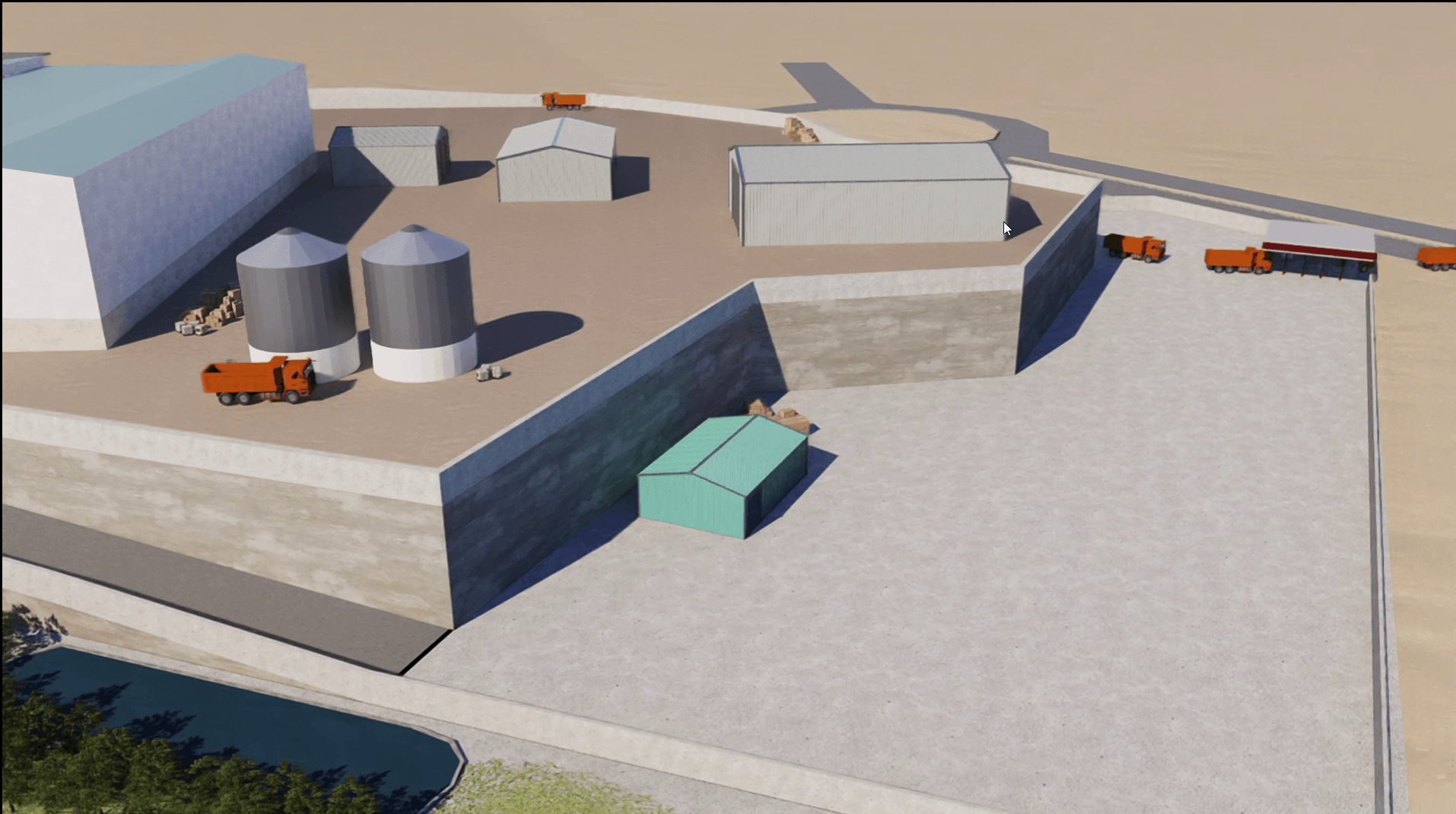
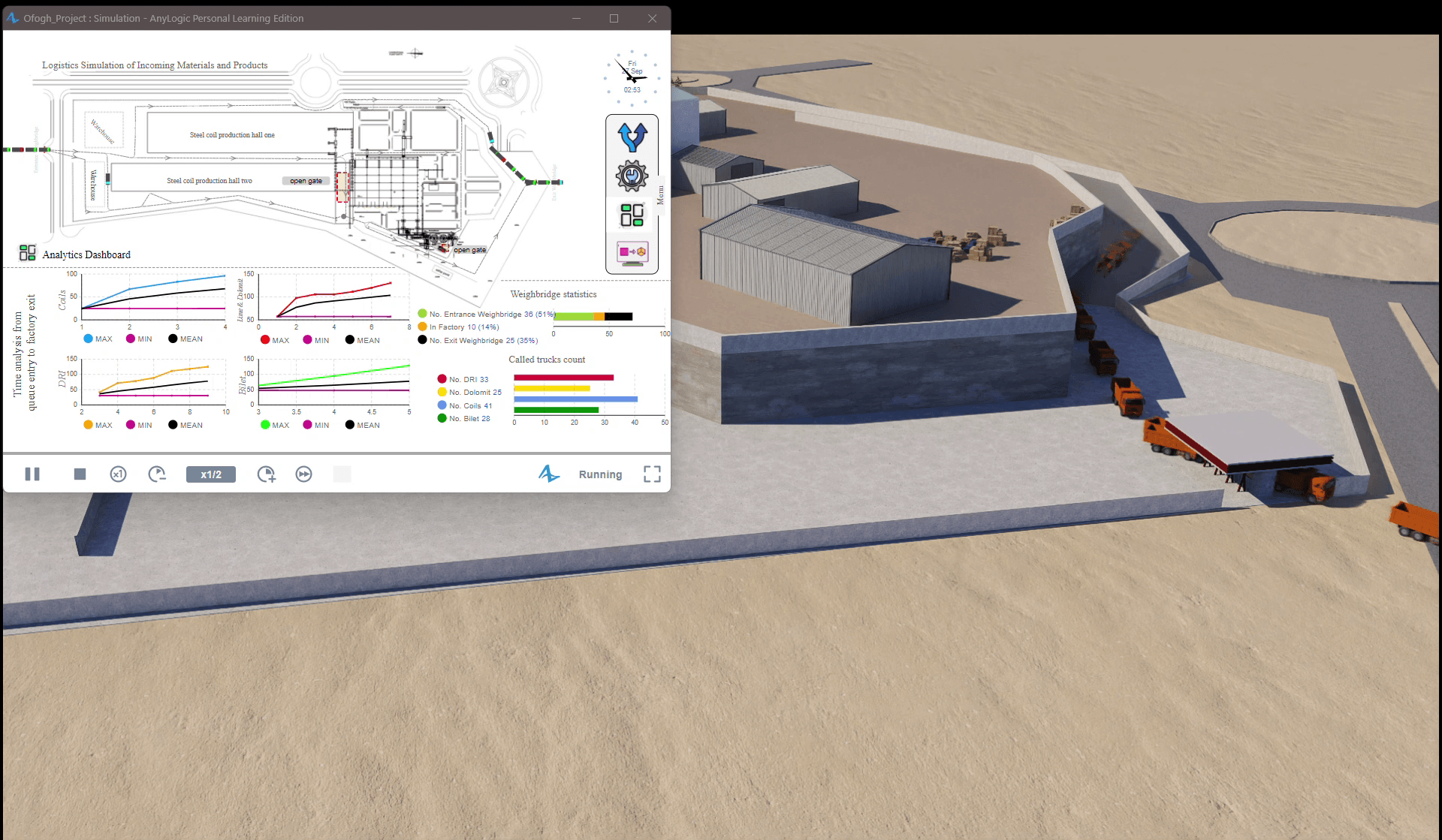
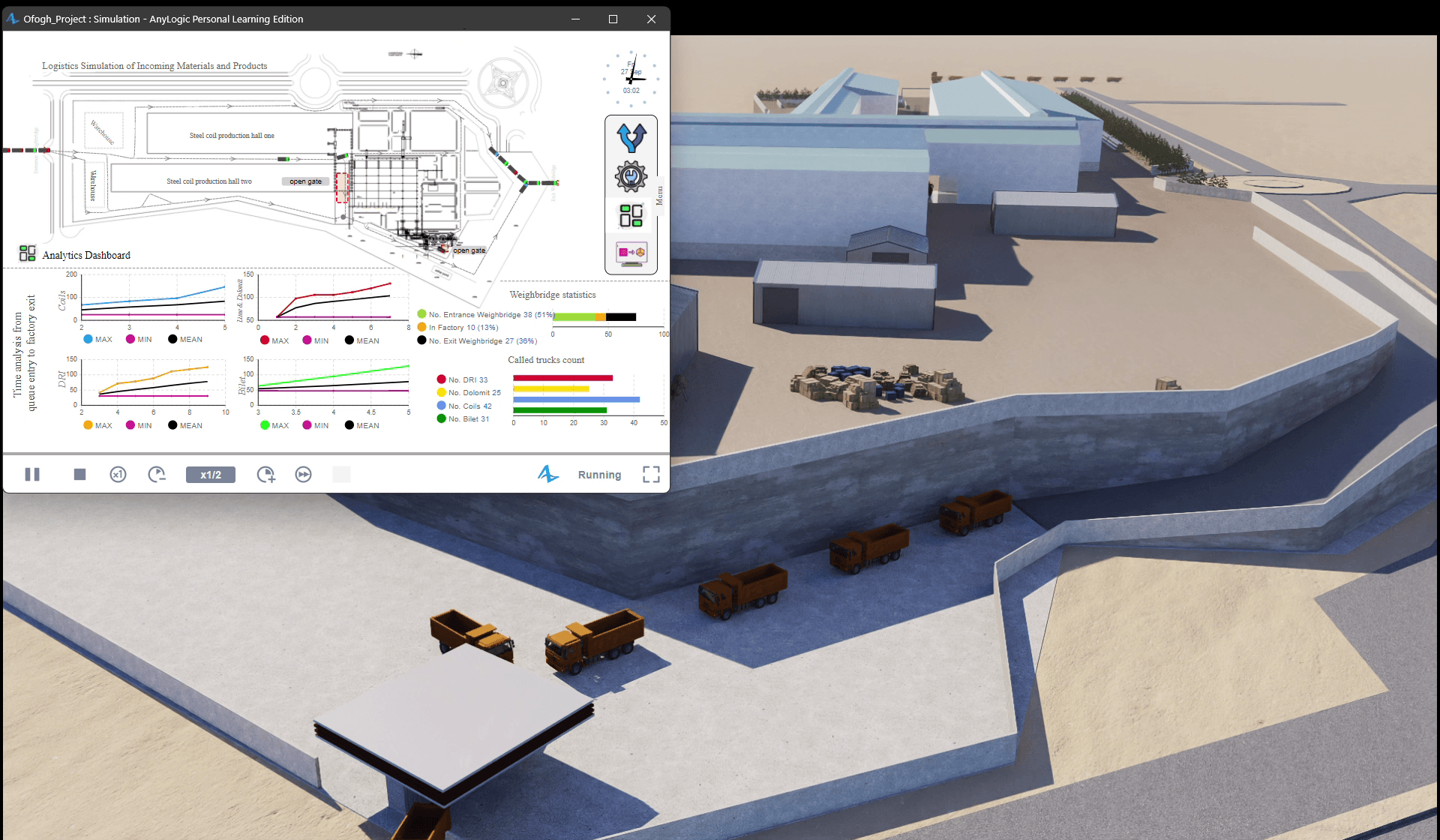
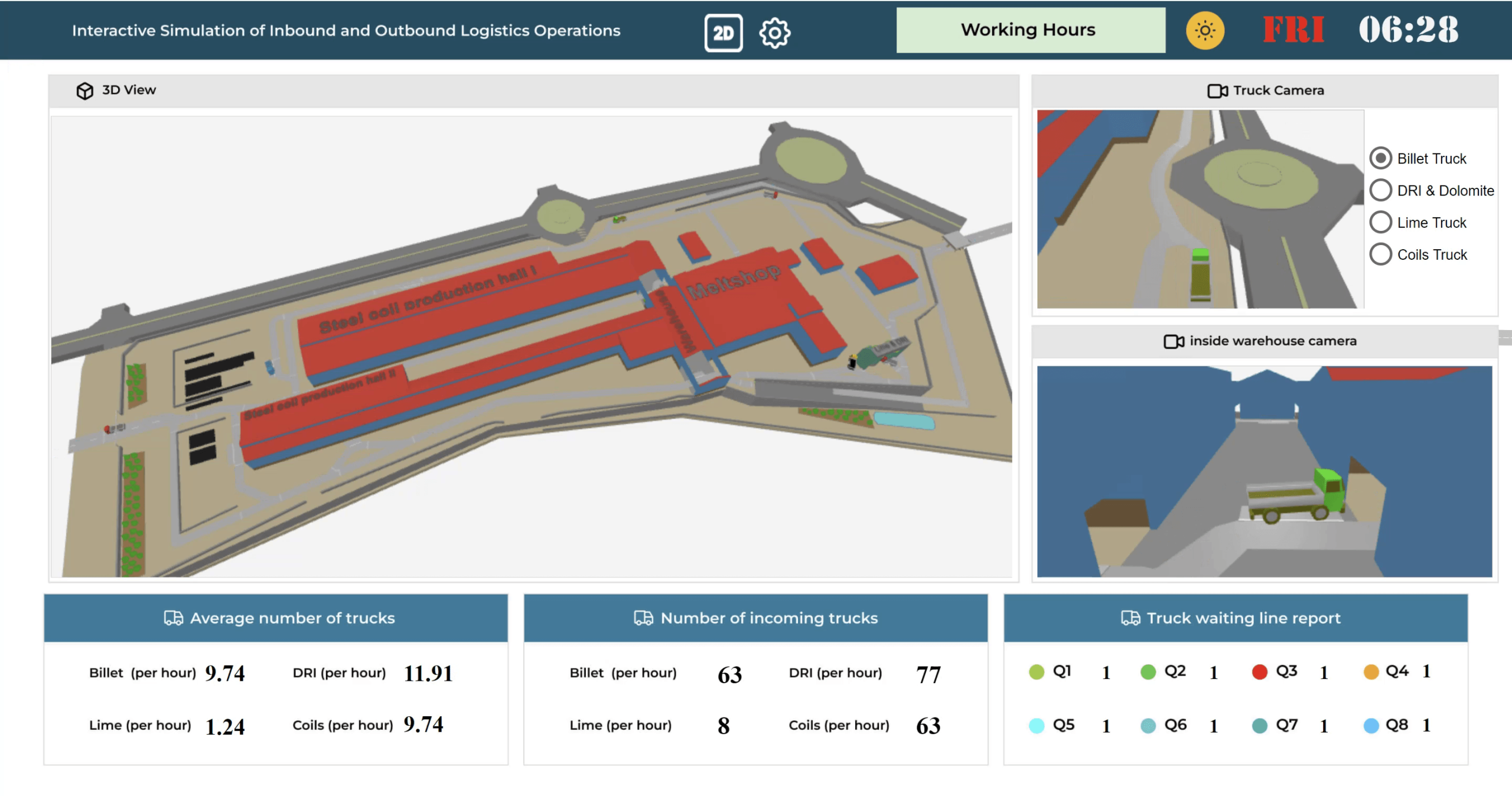
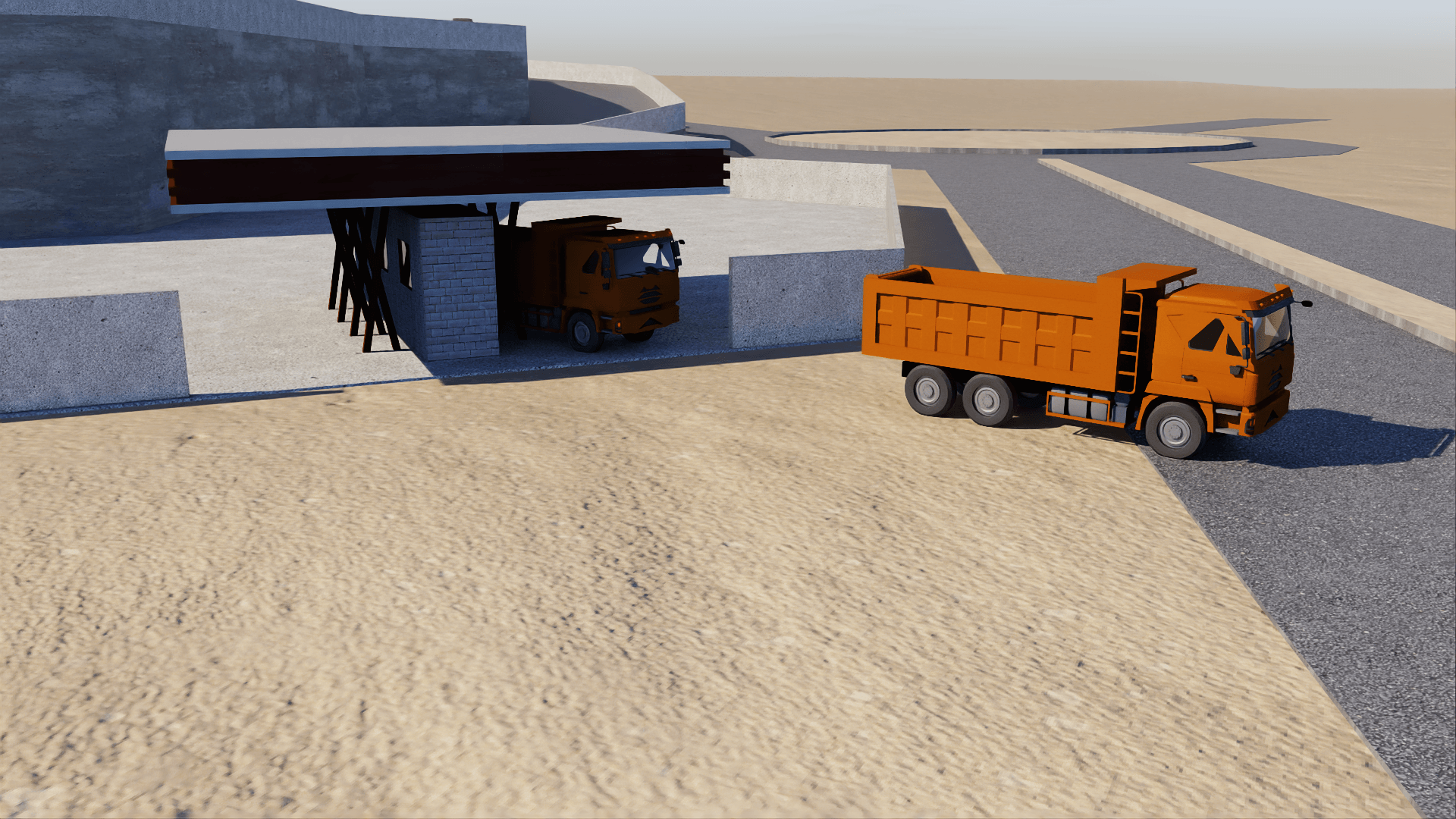
Challenges · Solution · Results
- Chronic congestion at truck entry and exit points.
- Vehicles queuing with unpredictable throughput.
- No reliable way to identify causes of buildup without halting production.
- Decision-making reliant on floor observation and intuition rather than data.
- Risk of spending capital on unvalidated infrastructure fixes (more lanes, staff, or shifts).
- Built a full simulation model mapping every inbound and outbound movement, timing, and internal plant interaction.
- Ran multiple operational scenarios including different arrival patterns, unloading sequences, and gate configurations.
- Identified exact vehicle blocking points and predictable congestion cycles.
- Completely redesigned the logistics flow by changing how trucks were scheduled, sequenced, and routed.
- Truck queuing was eliminated entirely.
- In and out flow was successfully redesigned at the operational level first.
- Avoided physical infrastructure changes and capital expenditure.
- Eliminated guesswork and live trial-and-error risks on the production facility.
In-Depth Documentation
What AlsanX Did
AlsanX built a full simulation model of the plant’s truck flow — mapping every inbound and outbound movement, timing, and interaction with internal plant operations. The model was built to reflect the plant’s actual operating patterns, not a simplified approximation.
Using the simulation, we ran multiple scenarios: different arrival patterns, different unloading sequences, different gate configurations. The model made visible what was invisible on the floor — the exact points where vehicles were blocking each other, when congestion was predictable, and what changes would break the cycle. The result was a completely redesigned logistics flow that eliminated queuing without requiring new infrastructure — only a change in how trucks were scheduled, sequenced, and routed through the facility.
The Outcome
Truck queuing was eliminated entirely. In and out flow was redesigned based on the simulation findings. The plant avoided the cost of physical infrastructure changes by solving the problem at the operational design level first.
What the Simulation Found
- Queuing was a sequencing problem, not a capacity problem.
- Peak congestion was predictable and preventable with schedule changes.
- Two specific interaction points were responsible for most of the delay.
- No new infrastructure was needed — only operational redesign.
What the Client Avoided
- Capital expenditure on additional gate infrastructure.
- Weeks of trial-and-error on a live production facility.
- Continued throughput loss during peak periods.
- Decisions based on floor observation rather than data.
Tools & Technologies
Explore more case studies
See how we've applied these methods across logistics, manufacturing, and beyond.
View All Case Studies →